
Why does a paraglider collapse in a second? The anatomy of a “sudden” collapse
In free flight we often hear the phrase: “It hit me out of nowhere.” On social media, videos of spectacular collapses fill up with comments about “ninja reflexes”, bad luck or the unpredictability of the air.
But after more than three decades of analysing profiles and flying in all kinds of conditions, the reality is much more objective: the wing always warns you.
If you have seen our latest video analysing a pilot’s collapse, today we want to dig deeper into the real physics behind a paraglider collapse and, most importantly, how to avoid it.
1. The myth of the “sudden” collapse
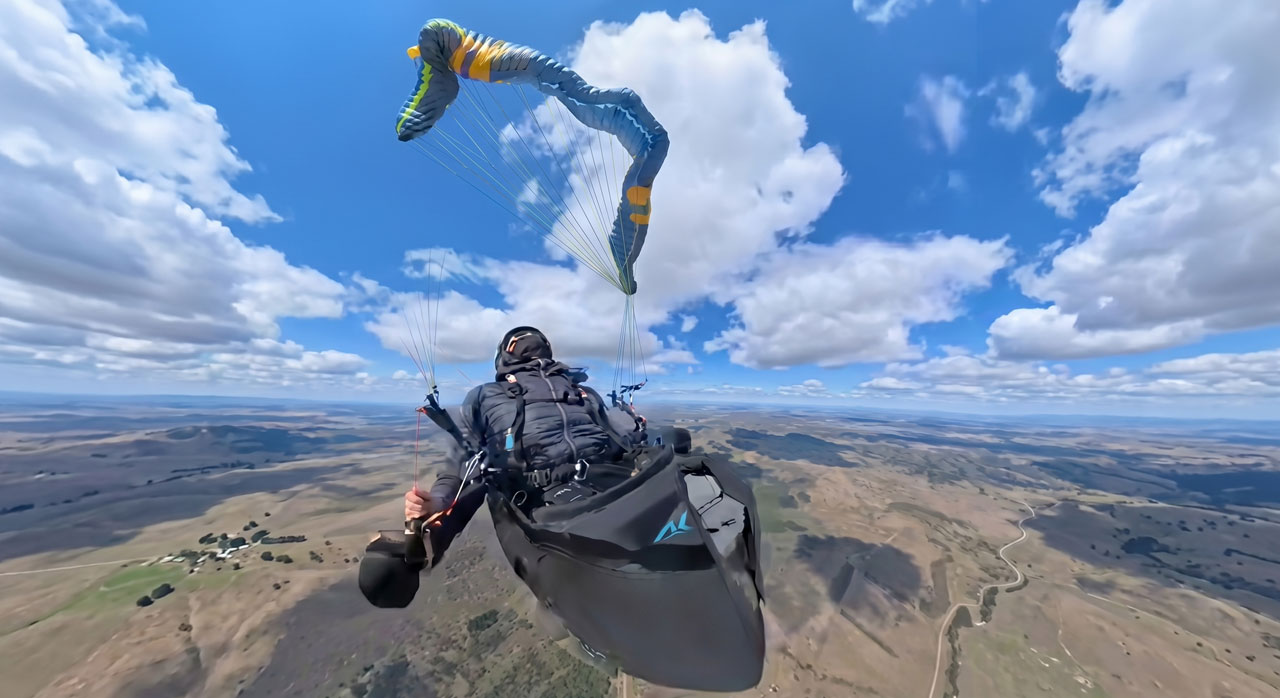
At first sight, the video is scary. The wing seems to deflate completely in a fraction of a second, turning into a rag. However, it was not a problem with the brand or the model, nor an apocalyptic condition.
Why did it deflate so much in one second? Because the wing entered an area of sinking air (or a broken thermal) and the internal pressure suddenly dropped to zero.
In a paraglider, if there is no internal pressure, the profile simply ceases to exist. Top brands spend years of engineering mitigating this; you can see how designers such as those at Ozone Gliders and their profile technology explain the importance of keeping the structure rigid through airflow and line tension on advanced models.
2. The three fatal mistakes in active piloting
When we analyse the video frame by frame, three very common technical errors become evident, and we need to banish them from our flying:
- The visual fixation trap (looking at the wing): after the first scare, the pilot freezes and loses peripheral vision. It is the classic phenomenon of target fixation. To better understand the psychology of risk in the air, the FAI safety commission (CIVL) offers manuals and reports on stress management and human factors in free-flight accidents.
- Reacting instead of acting: the pilot waited to see the fabric folded before acting. Active piloting is about anticipating through feel, not reacting visually once the collapse has already happened.
- Lack of energy (“little horse tugs”): when the pilot finally moved his hands, he gave short, timid tugs, as if driving the horses of a carriage. Faced with a brutal loss of pressure, the wing doesn’t need a little tug; it needs firm, energetic and deep input on the brakes to restore the profile’s tension.
3. The risers’ “WhatsApp”: it’s all in your hands
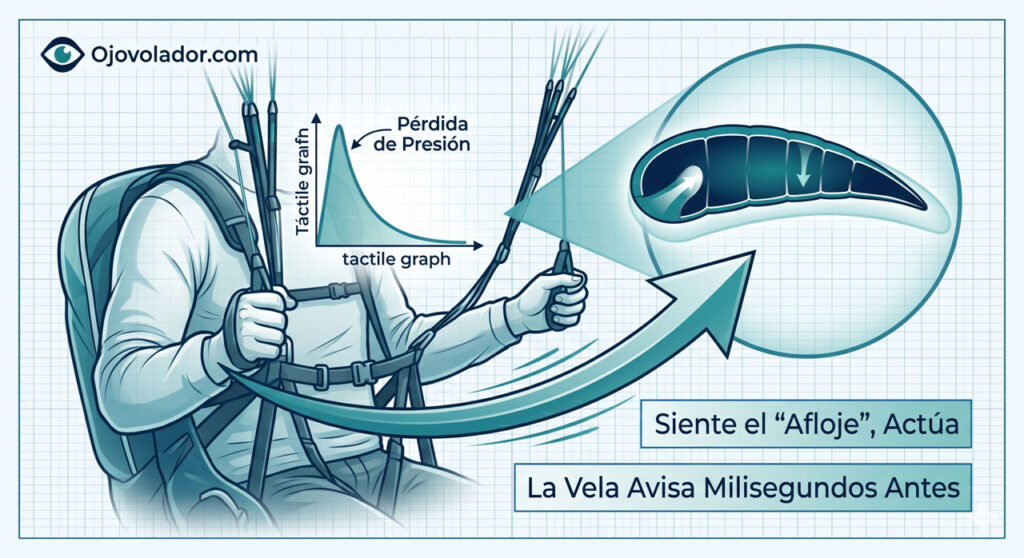
The secret to avoiding these situations does not lie in superhuman reflexes, but in developing “ears in your hands”.
Active piloting comes down to keeping constant tension on the brakes (the famous 2 kg reference pressure). The risers send you a warning message milliseconds before the leading edge collapses: your hand goes light and the brake loses resistance.
If, at that exact millisecond, instead of looking at the wing or getting scared, you lower your hands with the energy needed to restore the pressure, the profile stays rigid, the angle of attack increases and the collapse simply does not happen.
Conclusion: fewer eyes, more feel
Moving up a wing category (for example, stepping up to an EN-C two-liner) requires this automatism to be fully ingrained. Flying an advanced wing without having mastered the tactile sense of internal pressure only creates insecurity. If you want to dig deeper into how these wings behave in real situations, I recommend looking at the DHV safety studies and collapse tests, which analyse in detail the technical demands of each certification.
Active piloting is not some vague textbook theory; it is physics applied in real time. Next time you fly in thermal conditions, take your eyes off the fabric a little, concentrate on the pressure in your hands and listen to what your wing is telling you.
Good and safe flights to everyone!