Test Log · Level Wings Fuze · Entry #1 · Status: Just arrived
Series: The Parakite Odyssey
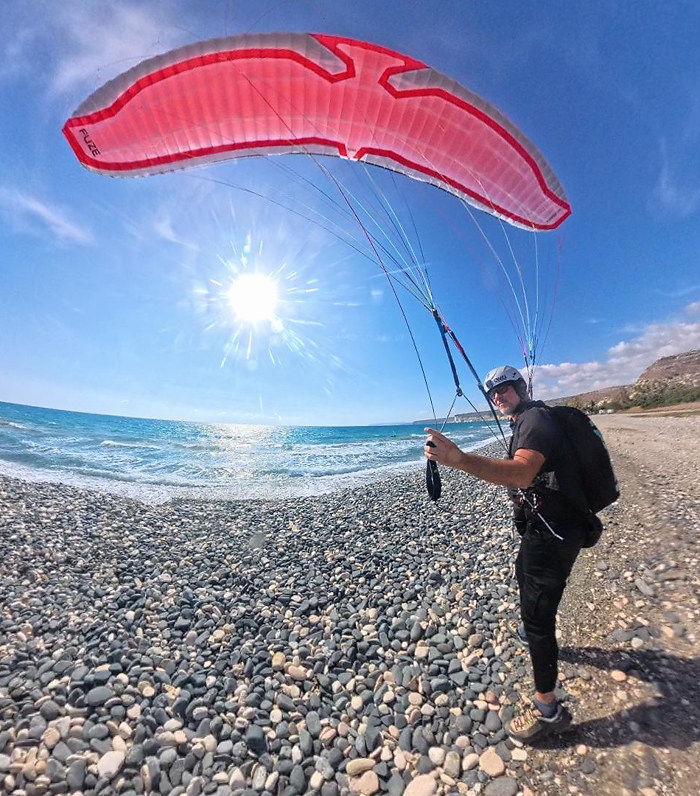
It had been years since I felt that exact mix of respect, uncertainty and pure curiosity: becoming a beginner again, with everything still to discover. This Level Wings Fuze kicks off “The Parakite Odyssey”, the series with which Ojovolador opens its doors to this discipline from Cyprus, our new base: a journey of discovery through the different types of parakite, told from a paraglider pilot’s point of view.
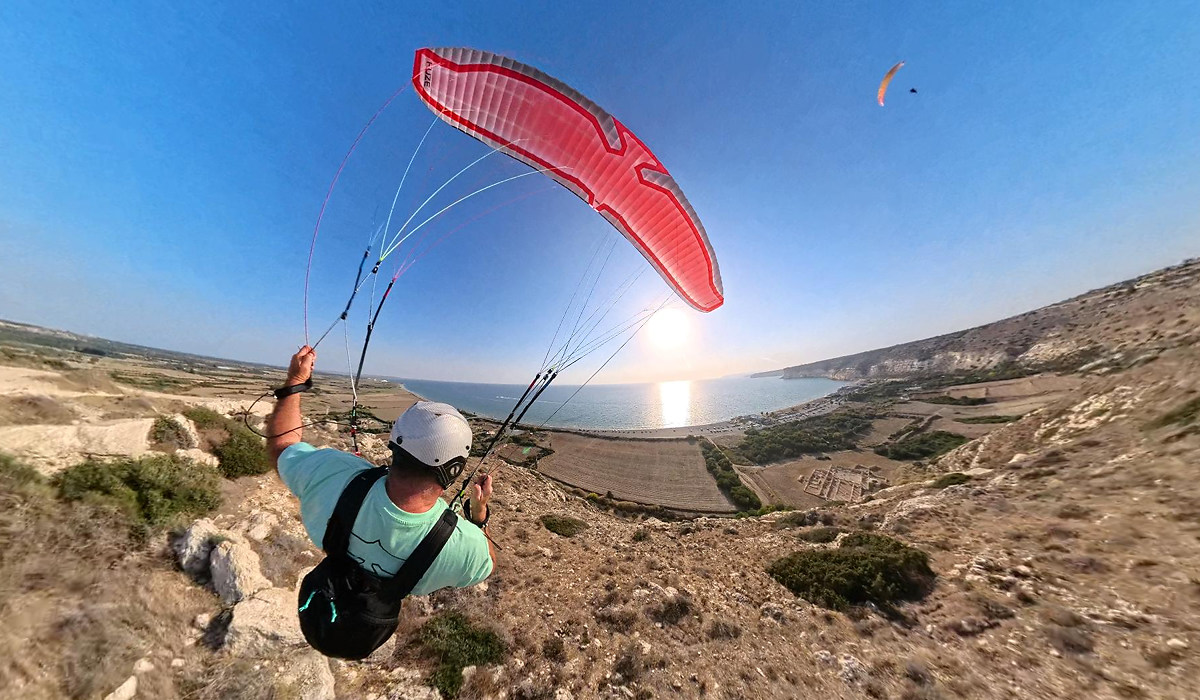
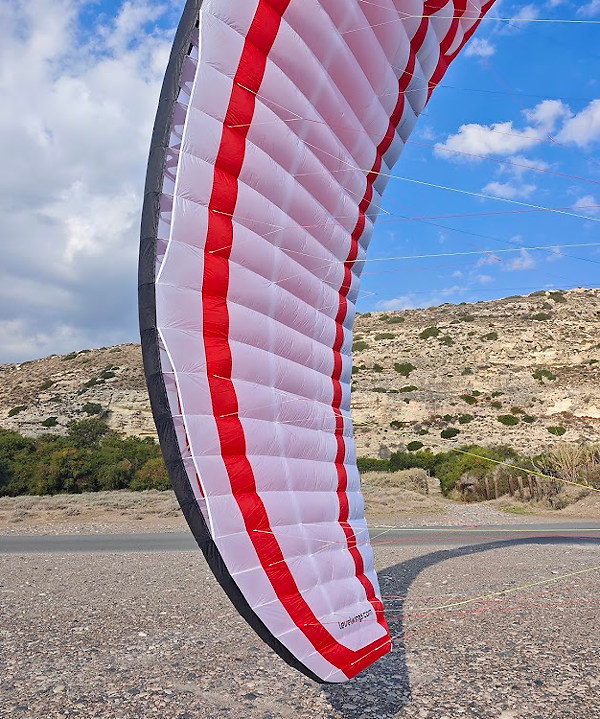
My first parakite has just arrived: a 22.5 m² Level Wings Fuze, a forgiving concept for getting into this discipline and progressing. The initial plan was modest: weak conditions, zero expectations and just a ground-handling session to understand the inertia and the profile’s response.
A first flight that wasn’t in the plan
Reality on launch was different: strong, crossed wind with that touch of rotor that messes up the air.
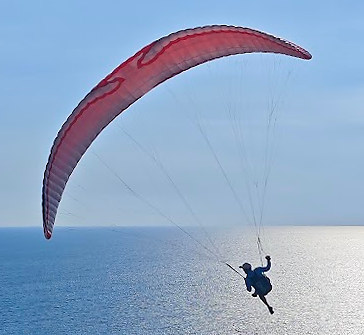
I inflated and was catapulted off. The wind was broken and sent sharp knocks straight into the risers, but the lift and solidity of the profile are striking from the very first second. Suddenly I found myself ridge soaring at tremendous speed, linking low passes and throwing in turns with brutal reactivity and relative ease. It was an intense 45 minutes, gripping the acro-style handles, with no let-up.
First lessons with the Level Wings Fuze
- Instant inflation: you hardly touch the A-risers; the wing rises on its own from pure internal pressure.
- Constant physical demand: there are no breaks and no moments to let go of the controls. The tension is continuous.
- Killing the wing on the ground: to neutralise the wing after landing, braking is not enough, because the profile still wants to fly. You have to grab the B-risers directly to kill the lift instantly.
Forget what you know about braking a paraglider
On a classic paraglider we pull the brake line, deform the trailing edge and create drag that slows that side of the wing and makes it turn. It works like a pure airbrake: it is effective, but it breaks the profile.
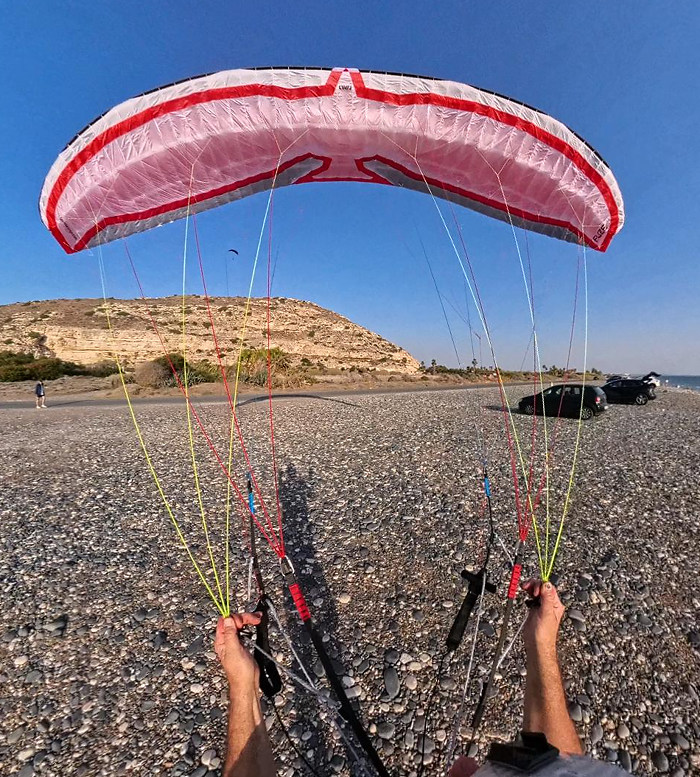
The parakite is relatively easy and intuitive, but it requires reprogramming yourself. Here the control acts on all three risers through a pulley system that modulates the angle of attack of the whole wing: as you operate it, the trim goes up and down as a block, in a balanced way. The reflex profile keeps its optimal shape across the whole speed range and retains its solidity in turbulence.
But the secret is not only in your hands: body weight is also key. By pushing your hips and decisively loading the harness to one side, you combine the change of angle of attack from the controls with the shift of your centre of gravity. That connection between your body and the integrated control opens up a huge range of nuances: from flat, carved turns to instant changes of direction without losing an ounce of internal pressure. You don’t brake; you fly with your whole body.
Letting go of the controls mid-hold: the self-stability of a reflex wing
Brake hard, build up energy and suddenly release the controls. On a classic paraglider, the violent surge forces you to stop the dive immediately or take a sharp frontal collapse. On a parakite, physics changes the game.
In one of our sessions with the Fuze we tested the self-stability of its reflex profile. When you release the wing mid-hold, it dives hard forwards, but instead of collapsing it locks in front of the pilot and bites into the air with absolute solidity. The upward curve of its trailing edge generates an automatic positive pitching moment: the more it dives, the more the nose tends to lift on its own, locking in leading-edge pressure.
Five years late
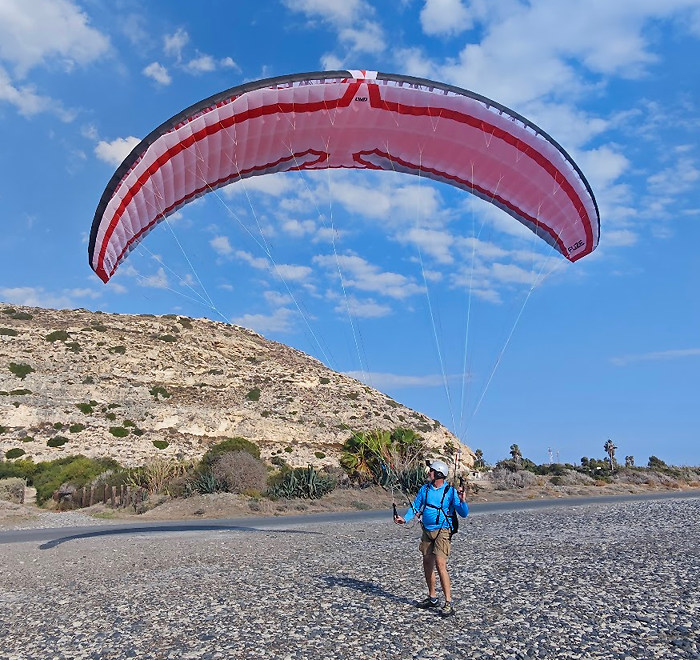
I have to admit it: I am five years late. My classic paraglider-pilot mindset clouded my judgement about this evolution. Flying by modulating the angle of attack of the whole chord, instead of just deforming the trailing edge with the brake, opens up a completely different dimension on the ridge.
Coming to this discipline with three decades of muscle memory under conventional paragliders is a fascinating exercise: it means reprogramming reflexes, trusting passive aerodynamics and rediscovering speed through a child’s eyes.
Level Wings Fuze technical specifications
Level Wings presents the Fuze as a parakite offering “a fresh approach to parakite soaring”, suitable for beginners through to professionals depending on wing loading and always with specific training from an instructor. It has a reflex profile, ABC kite risers with a Dive Blocker — a magnetic system that locks the handles to stop unwanted dives and allow a near-flat glide hands-off — and steering and speed control integrated into the handles themselves. It comes in six sizes; the one we are flying is the 22.5 m².
| Size | 10 | 12.5 | 15 | 17.5 | 20 | 22.5 |
|---|---|---|---|---|---|---|
| Cells | 51 | 51 | 51 | 51 | 51 | 51 |
| Flat area (m²) | 10.0 | 12.5 | 15.0 | 17.5 | 20.0 | 22.5 |
| Projected area (m²) | 8.32 | 10.40 | 12.46 | 14.55 | 16.60 | 18.70 |
| Flat span (m) | 7.34 | 8.20 | 9.00 | 9.70 | 10.40 | 11.02 |
| Projected span (m) | 5.77 | 6.40 | 7.00 | 7.60 | 8.20 | 8.66 |
| Flat aspect ratio | 5.40 | 5.40 | 5.40 | 5.40 | 5.40 | 5.40 |
| Projected aspect ratio | 4.00 | 4.00 | 4.00 | 4.00 | 4.00 | 4.00 |
| Root chord (m) | 1.64 | 1.80 | 2.00 | 2.20 | 2.30 | 2.46 |
| Weight (kg) | 2.70 | 3.10 | 3.44 | 3.90 | 4.28 | 4.56 |
| Certification | EN 926-1 | EN 926-1 | EN 926-1 | EN 926-1 | EN 926-1 | EN 926-1 |
Materials: Porcher Skytex 32 top surface; Skytex 32 / STA 15 bottom surface; ribs and diagonals in Skytex 40 HF (loaded) and Skytex 32 HF (unloaded); 13 mm webbing risers with replaceable Dyneema parts; Liros TSL 350/280/190/140, PPSL 275 and DC 100 lines. Reinforced leading edge and wingtips.
Note: the manufacturer itself warns that, because of its reflex profile, the Fuze behaves differently in a collapse and that it is not designed for strong turbulence or thermal flying. Active, responsible piloting is always mandatory.
What’s next in the Fuze test log
This is just the beginning. In the coming entries we will keep telling the story of progression with the Fuze: ground handling, ridge soaring in different winds, piloting technique and manoeuvres, and everything a paraglider pilot has to learn (and unlearn) to make the jump to parakiting.
Have you already made the jump to parakiting? How did your first flight feel? Do you trust the passive stability of a reflex wing, or does your instinct still ask you to pull the controls to stop the surge? Tell us in the comments or on our social media.
Level Wings Fuze test log
#1 · Just arrived: first flight and first lessons (you are here)
#2 · Coming soon: the Fuze under test
See all Level Wings Fuze entries → · “The Parakite Odyssey” series →
+ Info: levelwings.com/fuze · @levelwings · Follow us on Instagram: @ojovolador.parapente