

Gin Gliders has published a safety notice for the GTO 3, its two-line EN-C, due to differential shrinkage of some upper lines. The Korean brand asks all owners to check line lengths when the wing reaches 100 flying hours and to stop flying it if any of the affected Dyneema lines has shrunk by more than 10 mm. Those lines will be replaced with Kevlar ones.
What Gin says about the GTO 3 lines
According to the notice, the GTO 3 was originally designed with Dyneema lines (reference 9200-035) in certain upper line groups of the D cascade. After detecting differences in the dimensional stability of this material over time, Gin has decided to replace them with Kevlar lines (Edelrid 8001).
The brand stresses that the affected wings left the factory with the correct line geometry and trim. The problem appears with use: Dyneema can shrink more than Kevlar after around 100 flying hours, and the amount of shrinkage varies considerably depending on use and environmental conditions, especially exposure to humidity. This uneven shrinkage between materials can alter the wing’s original trim and, according to Gin, potentially affect its flight characteristics.
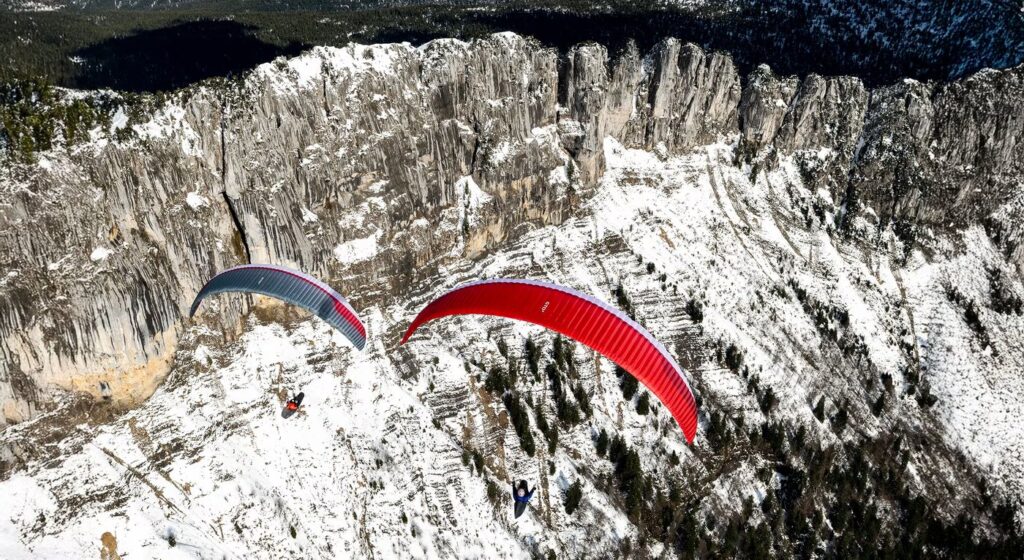
GTO 3 100-hour check: what pilots should do
Gin states that all GTO 3 owners must check line lengths when they reach 100 flying hours, following the inspection procedure in the user manual. The notice sets out three steps:
- General check: measure the overall line lengths following the procedure described in the GTO 3 manual.
- Individual measurement: if any measurement is outside the manual’s tolerances, measure each Dyneema line (9200-035) in the upper groups of the C and D cascades one by one. The reference length of each line is published on the GTO 3 product page on Gin’s website.
- Compare and contact: if any of those lines has shrunk by more than 10 mm from its original length, do not fly the wing and contact an authorised Gin dealer.
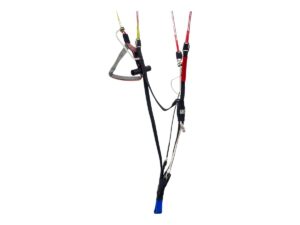
Although the description of the problem refers to the D cascade, the measuring procedure includes the Dyneema lines in the upper groups of both the C and D cascades. If shrinkage does not exceed 10 mm, no further action is needed for this specific reason, provided the wing meets all the other line-length and trim tolerances set out in the manual.
If your GTO 3 exceeds 10 mm of shrinkage
In that case, Gin asks you to stop flying the wing immediately and contact an authorised dealer. The dealer will arrange a new set of lines and give instructions on how to proceed. The GTO 3 must not be flown again until the new line set has been installed and the necessary checks completed. The brand keeps a list of authorised inspection and repair centres on its website.
Why a few millimetres matter on a two-line wing
Gin presented the GTO 3 in April 2025 as its contender in the EN-C class, the same category contested at events such as the SRS. On this type of wing, trim is a parameter that is being watched ever more closely: in competition, CIVL and the PWCA have cut trim tolerance to 10 mm, the same figure Gin uses as the limit in this notice.
It is not the brand’s first safety notice this year: in July, Gin announced a possible fault in the reserve handle of the Genie Race 5 harness.
Pilots with any doubts about their GTO 3 can contact their Gin dealer.
+Info: gingliders.com