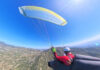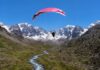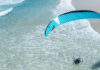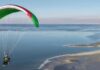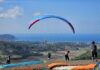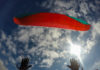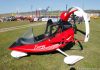

The new Flow RPM3 in size 23 arrives at our Test Log. Before flying it, we took it to the take-off for a first inspection, a few inflations and a detail photo session.
The package
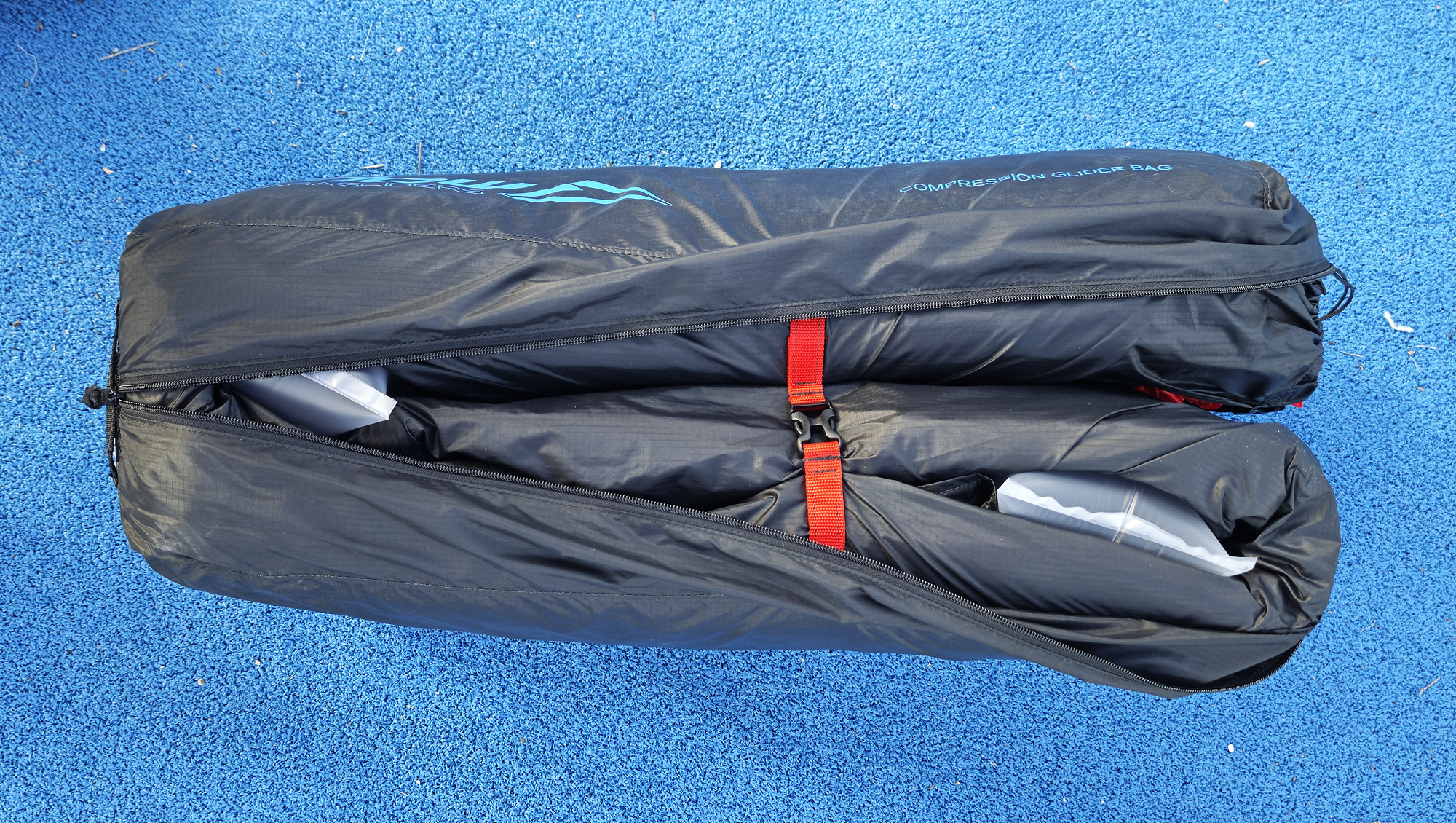
It arrives with a millimetre-perfect fit: a made-to-measure box hugging the compression concertina bag without a centimetre of wasted air. Opening the closures and freeing the cover, the first tactile verdict is robustness. The 38 g/m² Porcher Skytex on both the top and bottom surfaces conveys solidity, that of a tool built to rack up flying hours without the fabric losing its feel over the seasons.
The inspection, detail by detail
We laid the wing out at take-off and went over it piece by piece.
- Rod protection: under the canopy, Flow includes two inflatable tubes that protect the nylon rods at the tips and keep them from deforming during storage and transport.
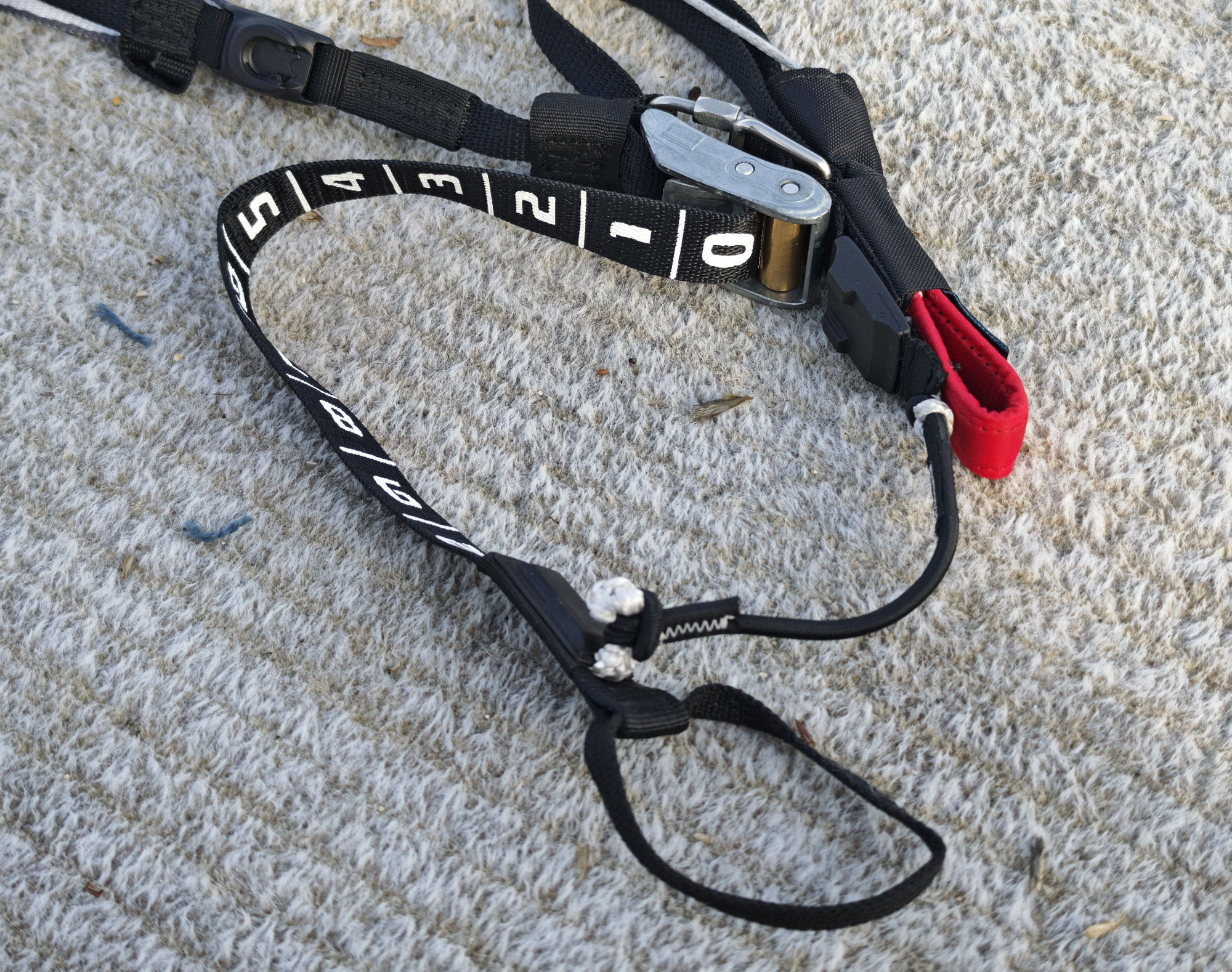
- Trimmers: a very generous system, with clear marks every 10 cm.
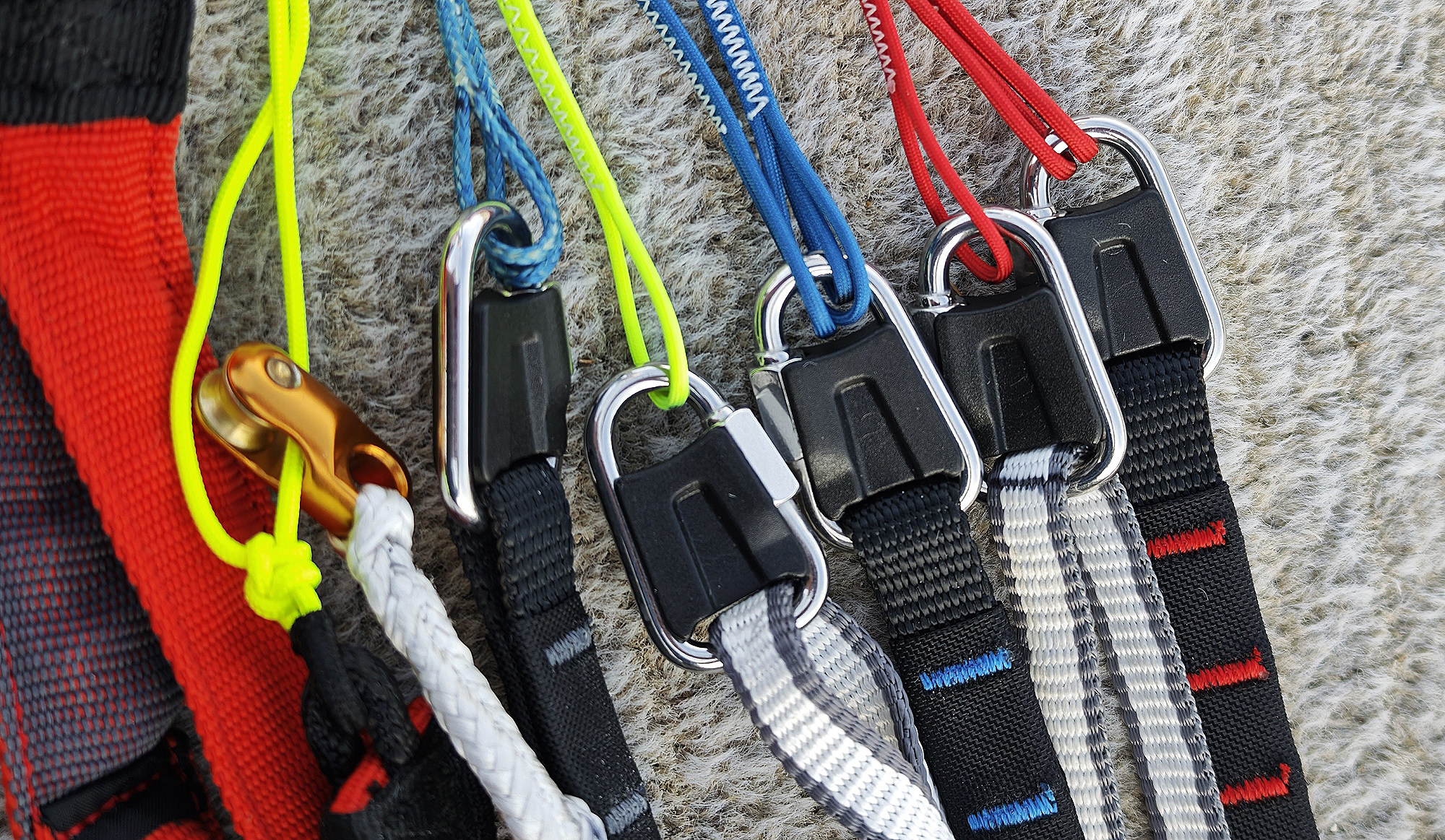
- Elastic bands: built into the risers to stop annoying flapping during the take-off run.
- Dual brake handles: with the trimmers closed they steer the centre of the profile. With full speed bar, steering passes to the stabilos.
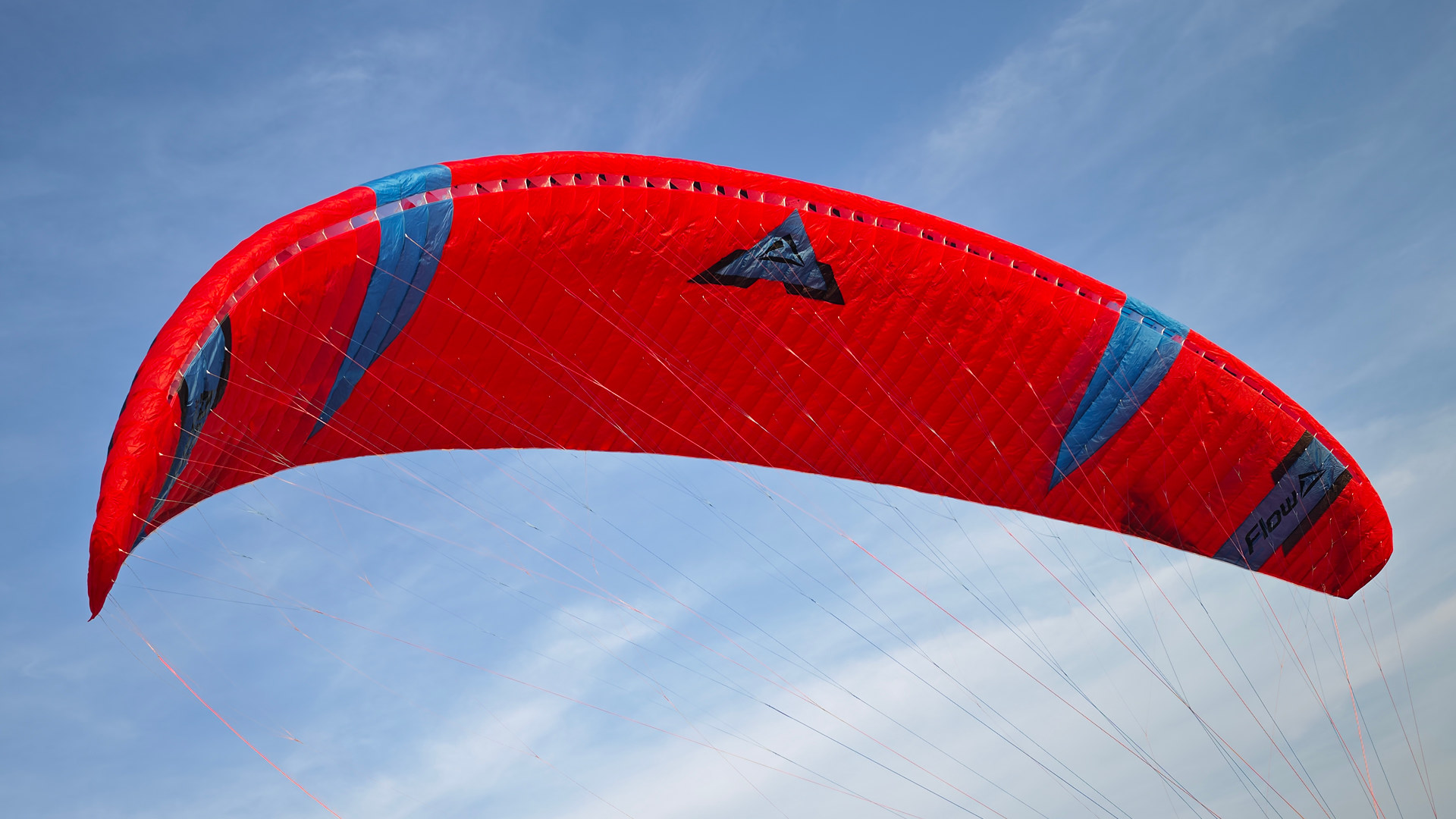
- Fabric and stitching: the 38 g Skytex up close.
- Welcome gift: a dry-fit T-shirt and a branded cap, both of very good quality.
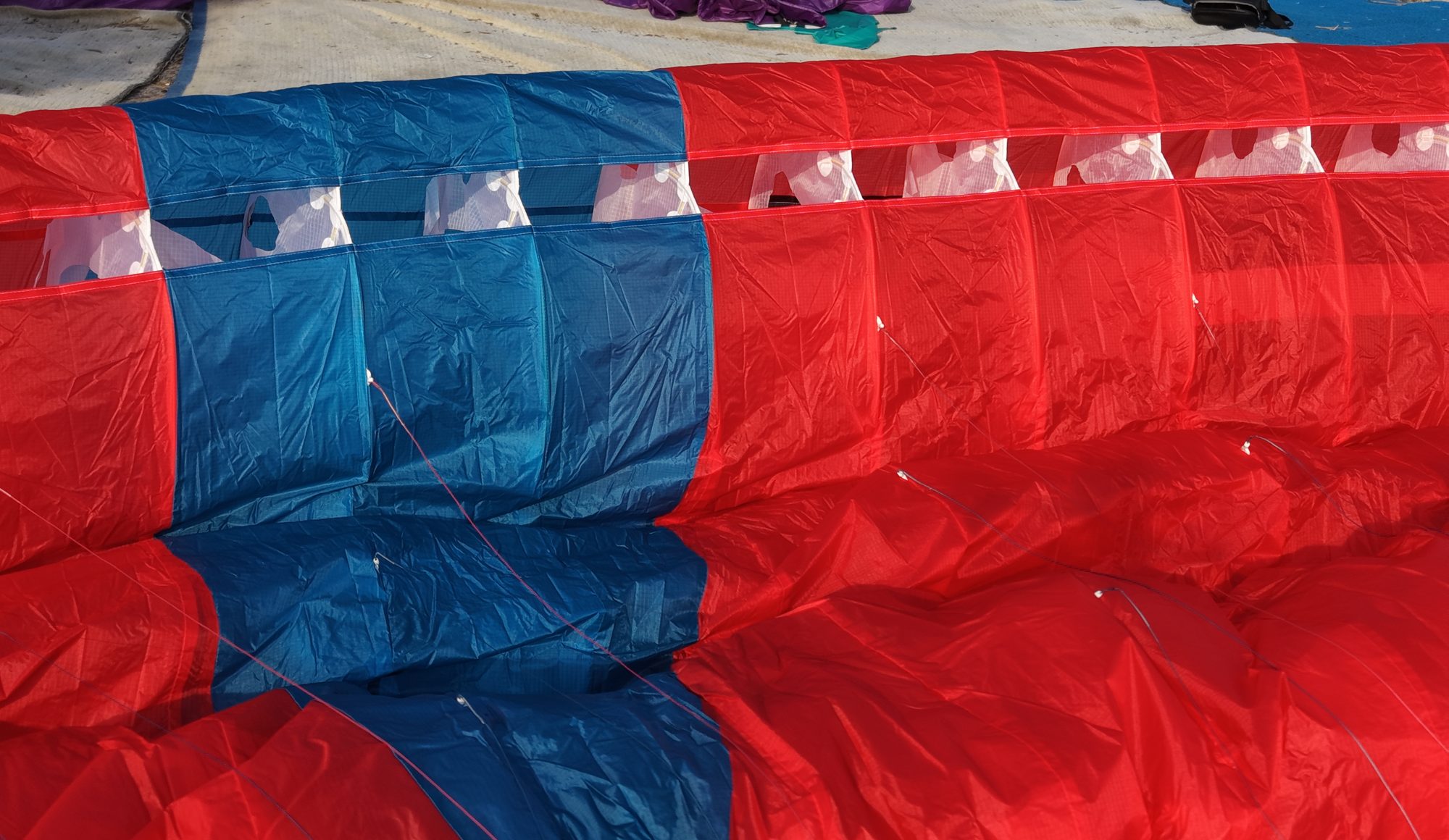
This photo of the cell openings shows several construction details: the shark nose of the leading edge, the nylon rods that distribute the tension of the lower surface, the set-back attachment points of the lines and unsheathed lines.
On paper
We already told you about Flow’s presentation of the RPM3. The size 23 is the largest of the four. According to the manufacturer’s spec sheet, it has 23.20 m² of flat area (20.16 m² projected), 11.75 m of flat wingspan and 65 cells, the same as every other size. The flat aspect ratio is 6.00 and the projected aspect ratio 4.61, and the wing weighs 4.7 kg. It combines a shark nose with a reflex profile: Flow is aiming for longitudinal stability in turbulent air without giving up agility in turns.
Take-off weight ranges. Flow publishes two ranges for the 23: 95 to 160 kg for advanced pilots and 90 to 140 kg for intermediate pilots. Across the rest of the range the advanced margin is just as wide: 60–125 kg on the 15, 70–135 kg on the 17.5 and 85–150 kg on the 20. That means the 17.5, 20 and 23 overlap between 95 and 135 kg, so choosing a size depends on the pilot, the motor and the intended use.
Aspect ratio. The flat aspect ratio rises from 5.70 on the 15 and 5.75 on the 17.5 to 6.00 on the 20 and the 23. The projected one goes from 4.38 on the 15 to 4.61 on the two larger sizes.
| 15 | 17.5 | 20 | 23 | |
|---|---|---|---|---|
| Flat area (m²) | 15.20 | 17.60 | 20.20 | 23.20 |
| Projected area (m²) | 14.14 | 15.29 | 17.45 | 20.16 |
| Flat wingspan (m) | 9.26 | 10.04 | 10.96 | 11.75 |
| Flat aspect ratio | 5.70 | 5.75 | 6.00 | 6.00 |
| Projected aspect ratio | 4.38 | 4.42 | 4.61 | 4.61 |
| Cells | 65 | 65 | 65 | 65 |
| Glider weight (kg) | 4.1 | 4.2 | 4.5 | 4.7 |
| Take-off weight, advanced (kg) | 60-125 | 70-135 | 85-150 | 95-160 |
| Take-off weight, intermediate (kg) | 55-105 | 65-115 | 80-130 | 90-140 |
First impressions on the ground
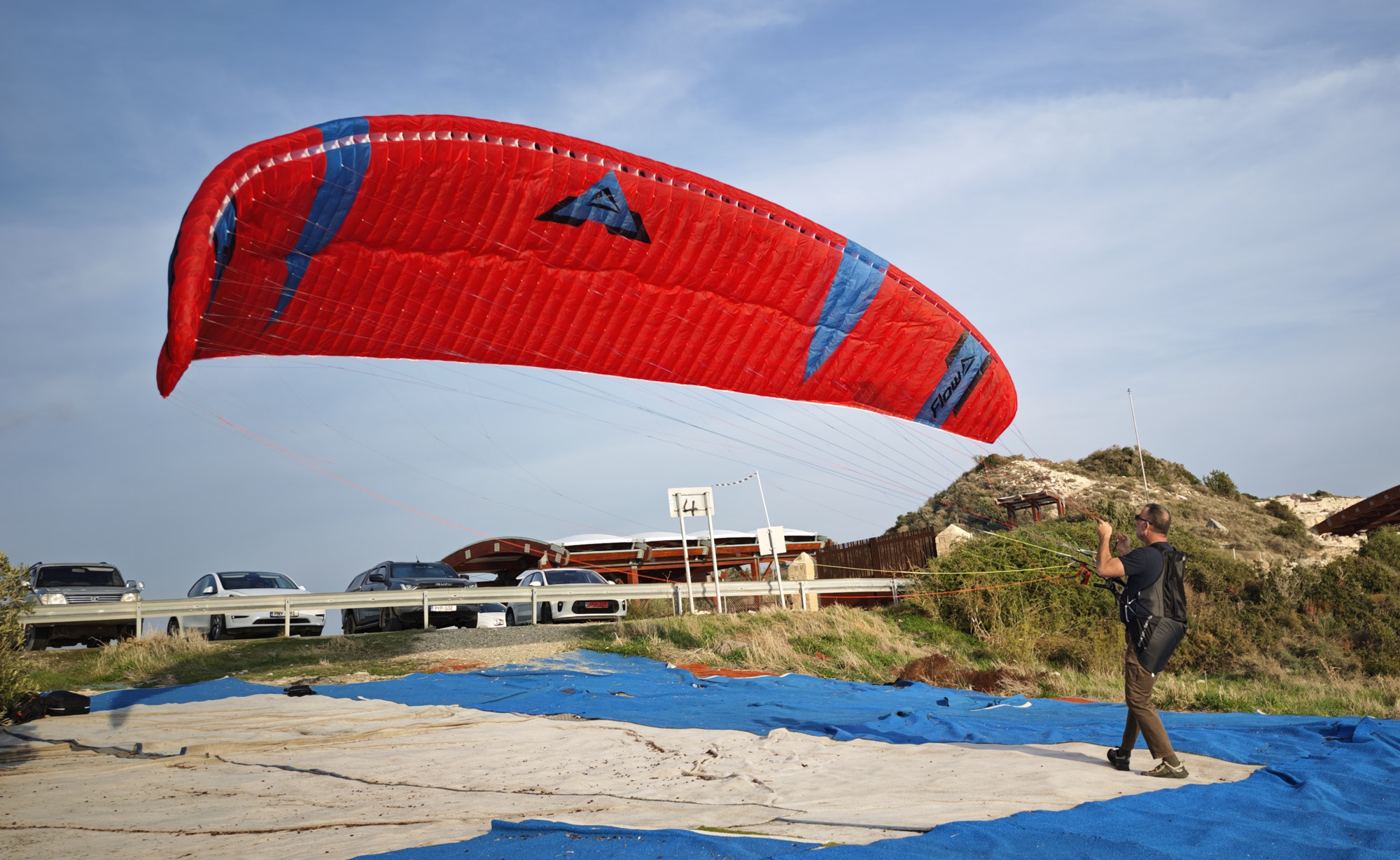
We practised a few inflations at take-off. The canopy rises at the slightest input, very solid, without overshooting or demanding abrupt corrections. The verdict in the air is still pending, but on the ground it conveys the authority of the big projects.
What’s next
In the next instalment of the log, the first real flying sensations with the paratrike. After that will come the “on test” notes depending on sites and conditions, and finally the full test.
Source of the technical data: RPM3 page at Flow Paragliders.