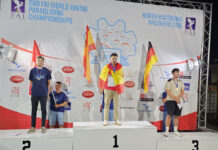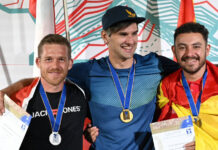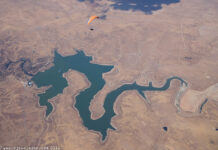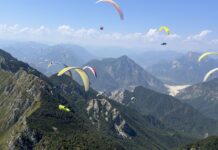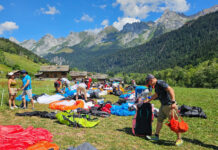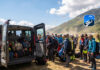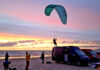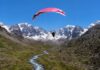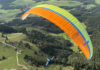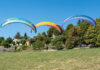
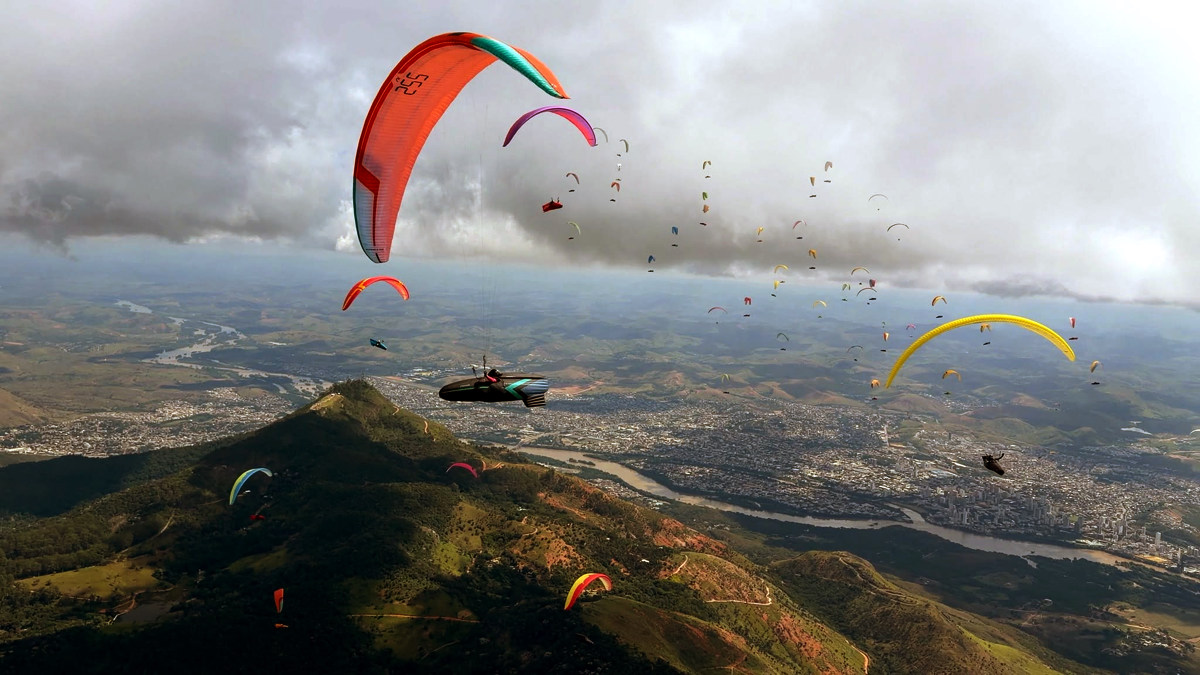
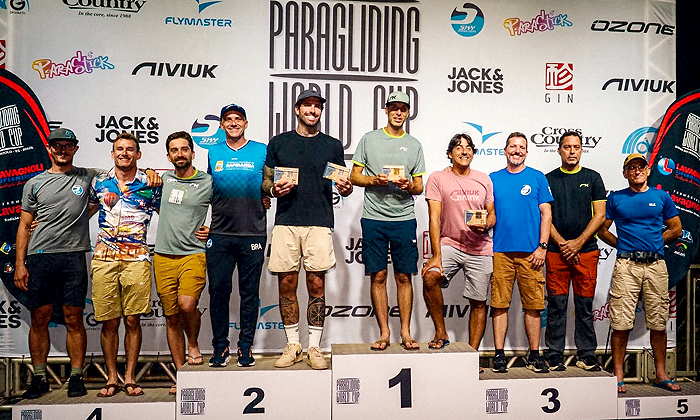
Swiss pilot Andy Aebi, flying the Niviuk Icepeak X-One, has won the PWC Brazil 2026, the last Paragliding World Cup event of the year, held in Baixo Guandu, in the state of Espírito Santo, after leading the overall ranking throughout the week and completing six tasks. Brazil’s Claudio Matos (Ozone Enzo 3) finished second and his compatriot Erico Oliveira, also on the Icepeak X-One, third. American pilot Violeta Jiménez won the women’s category and Niviuk took the team ranking.
Final results of the PWC Brazil 2026
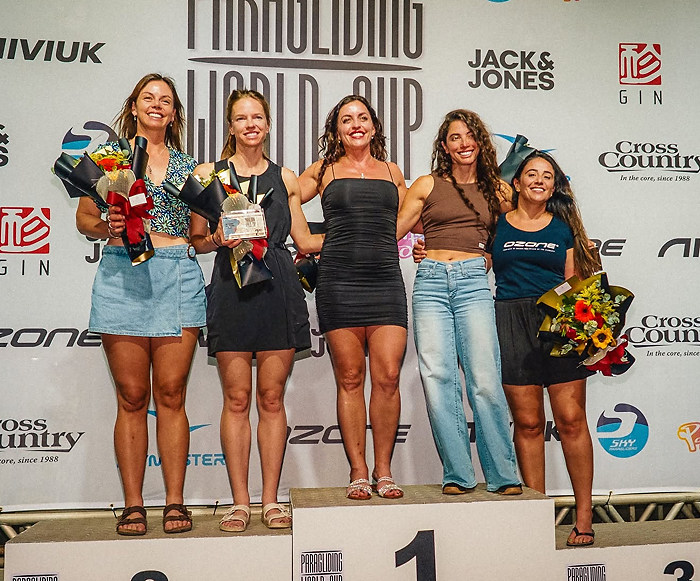
Overall
- Andy Aebi (Switzerland) – Niviuk Icepeak X-One
- Claudio Matos (Brazil) – Ozone Enzo 3
- Erico Oliveira (Brazil) – Niviuk Icepeak X-One
Women
- Violeta Jiménez (USA) – Ozone Enzo 3
- Lynsey Haynes (Canada) – Ozone Enzo 3
- Pamela Diez (Mexico) – Ozone Enzo 3
Teams: 1st Niviuk, 2nd Sky Paragliders, 3rd Ozone.
A Paragliding World Cup in Espírito Santo
The competition took place from 3 to 10 October at the Monjolo launch, in Baixo Guandu. Around fifty pilots from at least 15 countries took part, including a Brazilian delegation of 16 pilots. Aebi was Paragliding World Champion in 2009 and won the overall World Cup ranking in 2008. Each event of the season gives access to the Superfinal in May 2027 in Grindelwald-Interlaken, for which the top 15 in the overall ranking and the top three women qualify directly.
If you want to better understand the format of these events, at Ojovolador we explain what the Paragliding World Cup is (in Spanish). You can also look back at how the previous season started in our report on the PWC Algodonales 2025 or at Ozone’s last big result at the Gemona World Cup.
How each task unfolded
Task 1. Under mostly overcast skies with only some sunshine, the PWCA describes the conditions as workable but not easy. The first leg was into the wind and, towards the end, the shading weakened the climbs. Many pilots landed before the end of the speed section (ESS) and others between the ESS and goal.
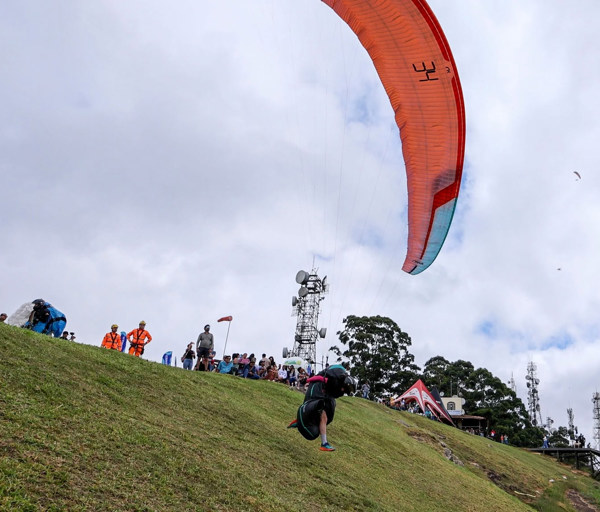
Task 2. This was an 85 km task in which pilots who took a flatter route, away from the mountains, beat the group that stayed high close to the relief. The section past the volcano was one of the trickiest. Swiss pilot Tim Bollinger tried to break away alone, but the groups came back together later on. Bollinger and Aebi were setting the pace at the front, although they lost time by choosing a less favourable line near the ESS and had to stop to climb again. The task was won by the pilot who found a line further to the right and reached goal without an extra thermal. After two tasks, Aebi led the overall ranking, Jiménez the women’s and Ozone the team classification.
Task 3. At 101 km, the task left the main launch heading south, an unusual direction in competition, then turned northwest and east and passed the landmark known as “the whale” before finishing at the airport goal. The lead group stayed together for almost the whole course, with frequent changes at the front. Aebi was the fastest across the ESS, but the task was won by Cuban pilot Carlos Avila, who scored more leading points for spending more time at the front. Most pilots arrived within five minutes of the winner.
Task 4. This was the toughest one. With scattered cirrus, thermals topped out lower than usual because of an inversion at around 1,800 m above sea level. The field stayed together until well into the task, but on the southbound leg it split into two groups that drifted further and further apart. The final leg, into a headwind, decided the task: the second group, with ever weaker climbs and more wind, could not gain height. Only five pilots made goal.
Task 5. The sky was mostly blue, with a lower cloudbase, reduced thermal ceilings and a stronger wind from the north and northeast. The route followed a similar direction to the previous day’s, but avoided the difficult final upwind leg. The PWCA highlights the high number of pilots in goal and a final section much easier than the day before.
Task 6. The final day was flown in weaker conditions, under blue skies, in a slower and more tactical race. The field split into small groups for much of the task and several pilots who pushed ahead too early ended up on the ground, which in Brazil is known as “ir a prego”. 26 pilots made goal and two crossed the ESS in the same second. Julien Wirtz won the task, Jiménez was the top woman and Aebi, who had been consistent across all six tasks, secured the overall victory.
The gear on the podiums
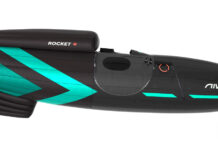
Aebi and Oliveira flew the Icepeak X-One with Niviuk’s Rocket R harness, and the entire women’s podium flew Ozone’s Enzo 3. Tim Bollinger, who appears at the front in the second task, is a Gin factory pilot. To keep up with the latest from the podium manufacturers, check out our content on Niviuk and Ozone.
Next Paragliding World Cup event
The next event on the PWCA calendar is the Paragliding World Cup in India, in Panchgani, from 14 to 21 February 2027.
+Info: pwca.org