
Test Log · AirDesign Vivo 3 · Entry #1 · Status: Just arrived
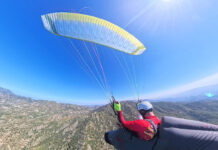
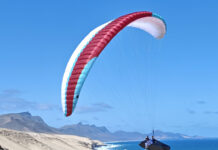
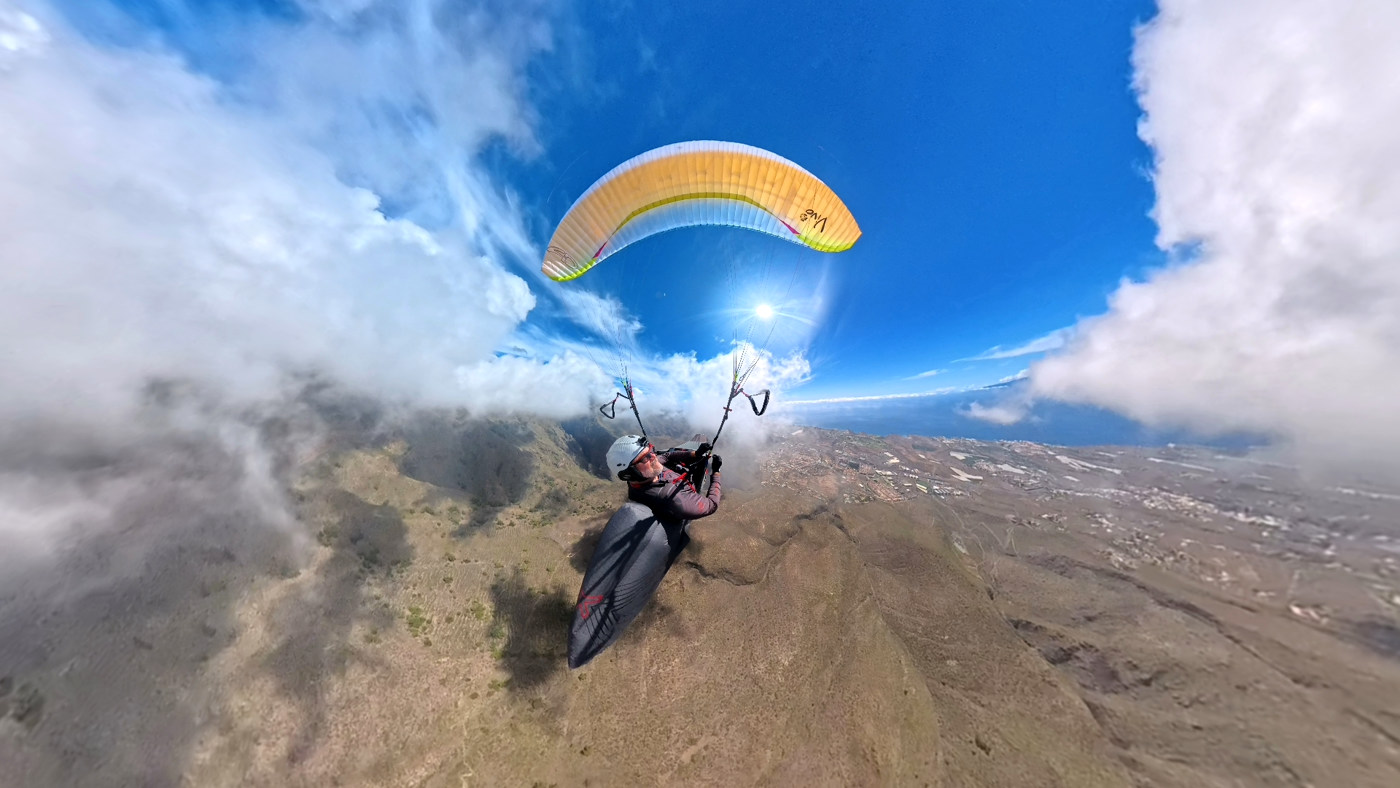
The AirDesign Vivo 3 arrived just one day before I travelled to Tenerife, so I packed it in my luggage and brought it with me: a Vivo 3 in size L (100–120 kg). And I was lucky enough to find really interesting conditions to try it: varied thermals, with some very soft moments and others that were properly punchy. Far from the war of extremes, this wing sits exactly where a classic EN B should be: in balance.
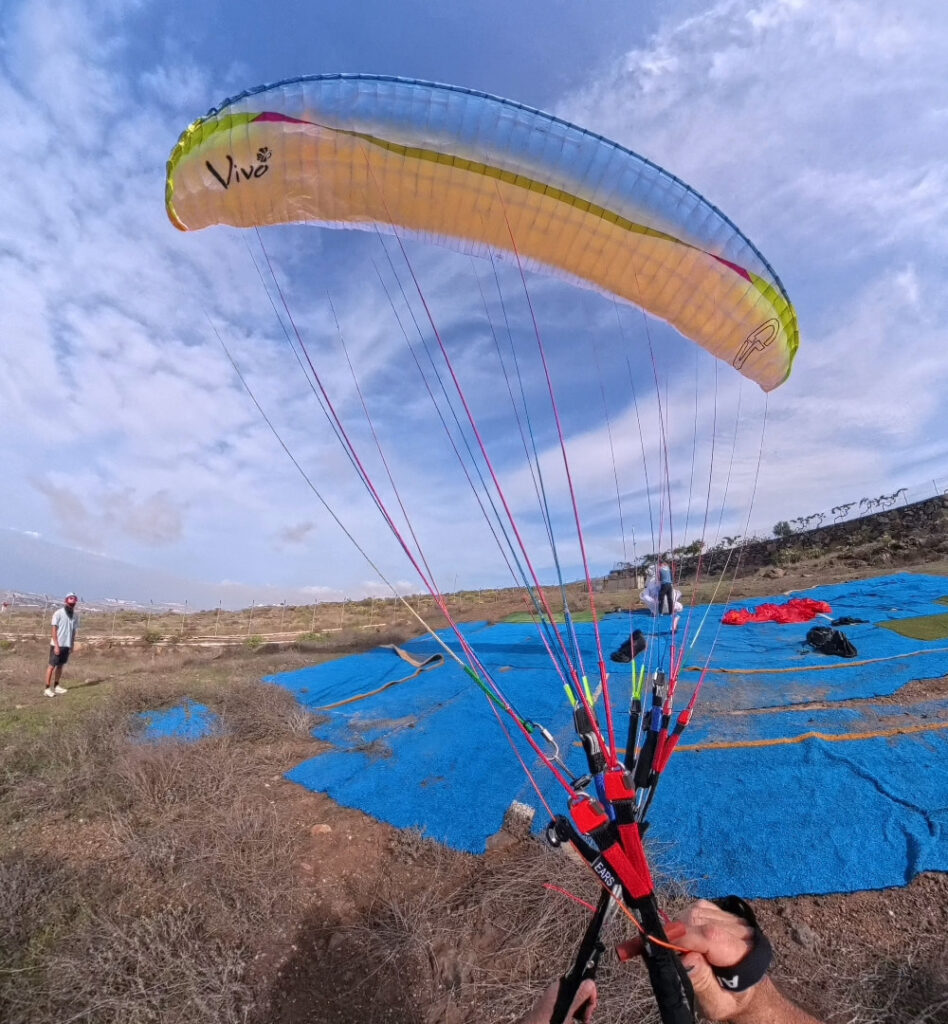
First impressions: luxury build quality
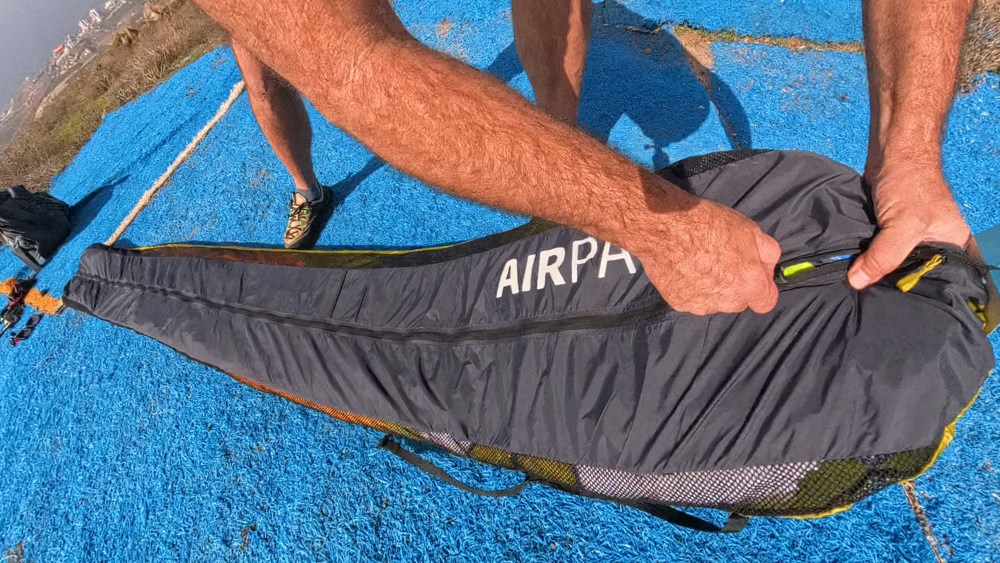
As soon as you lay out the gear you can tell AirDesign’s build quality is luxurious: top-level materials and finishes, impeccable stitching and carefully thought-out details on every part. And despite not being an ultralight wing, the Vivo 3 packs down surprisingly small.
Almost school-like inflation, a smooth landing flare
The AirDesign Vivo 3 inflates almost like a school wing: it rises with hardly any tendency to overshoot, but with lift from the very first moment, which gives a lot of confidence on launch. On landing it offers a smooth, balanced flare, with plenty of brake travel to nail the landing.
First flight: from scratching zeros to touching the clouds
The first flight was the ultimate test of patience and handling: half an hour scratching in weak lift at low altitude, on the verge of heading out to land, before ending up kissing the clouds within minutes. It wasn’t a gift of a flight: I had to work, fight for every metre, feel the wingtips and stay calm turning in impossible zeros close to the terrain. That is where a wing shows its true potential. A great afternoon of flying shared with Philippe Boers and Dan Meunier.
From that millimetric struggle we went on to hook a strong core that catapulted us straight to cloudbase. Two clear conclusions:
- In weak, broken thermals: it floats, bites without slowing down and gives you just the right brake feel so you don’t let a single wisp of lift escape.
- When the core gets strong: the Vivo 3 stays solid, doesn’t flex too much or spit you out; it bites forwards and cores with authority without getting nervous or letting the tips go soft.
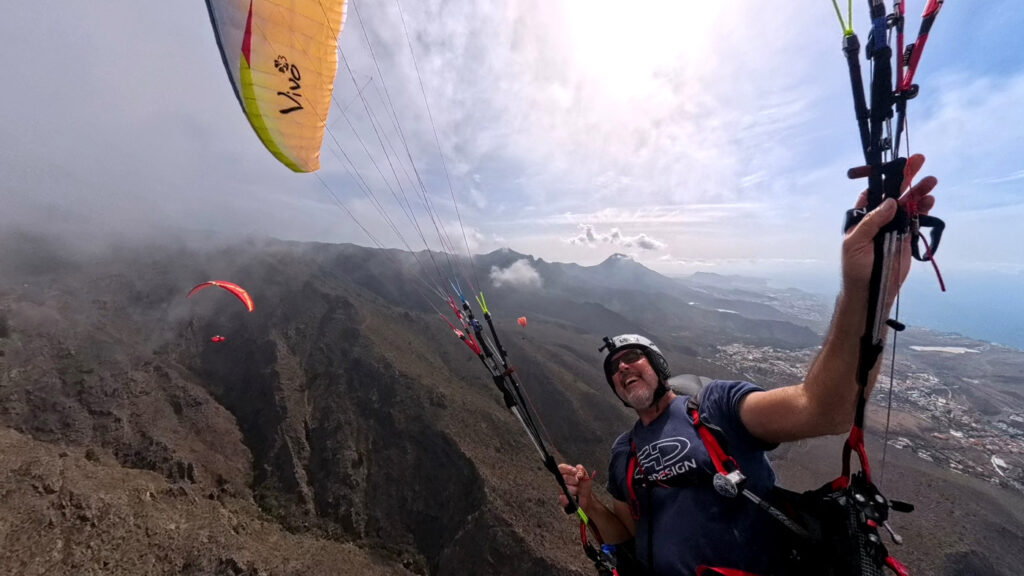
A turn with trajectory memory
Flying it hard, there is one virtue you notice straight away. Some wings try to throw you out on every turn, forcing you to correct with the outside brake and constantly manage roll so you don’t lose the core. The Vivo 3 does exactly the opposite: it bites, settles into the turn and stays there, locked into the core as if it had trajectory memory. Brake corrections are reduced to a minimum; the wing holds its radius and works the lift almost organically.
In wide thermals the handling is very soft. When needed, it can turn very tightly, although in return the brake gets heavier. That stability in the turn doesn’t just save mental energy on a long flight: it lets you relax, look up, read the terrain and plan your next line calmly.
In the air it is a solid wing, but one that communicates: it tells you what is happening in the air without overwhelming you.
Where it sits: a true classic EN B
The Vivo 3 doesn’t fall short like an advanced school wing, nor does it demand the tension of a high B. The handling is direct and the wing bites into lift with composure: a noble toy for thermalling, playful flying and pure recreational flying.
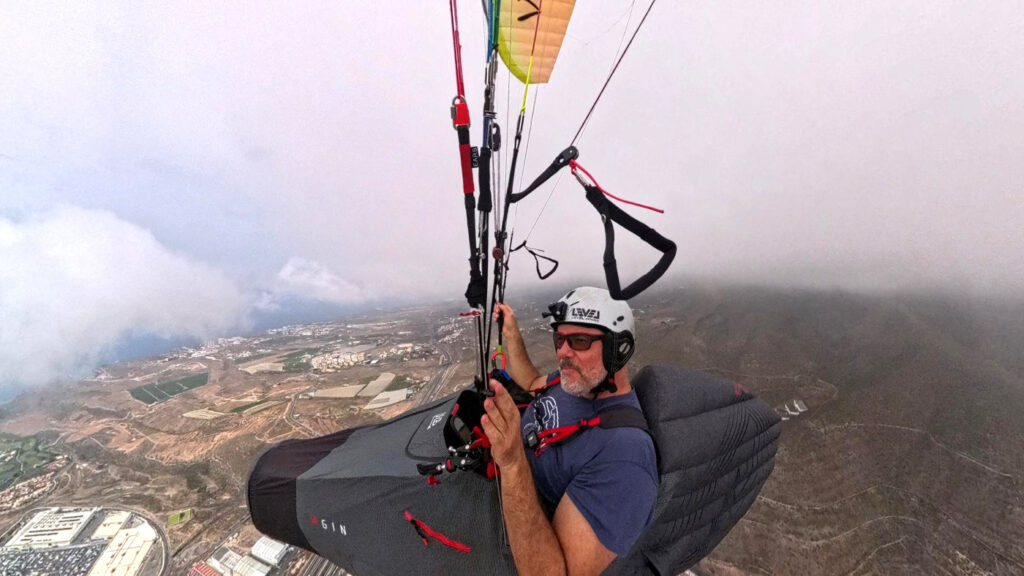
That is exactly what AirDesign was aiming for. The Austrian brand places it between the Eazy and the Soar, as the logical next step for pilots moving up from an EN A or an entry-level B, and defines it as a mid-B into which it has condensed the experience of its two-liners, such as the Volt and the Hero XPed. That is where its 2.5-line architecture comes from, with good support at the wingtips and that “bite” in thermals; risers inspired by the high-B class, with handles for rear-riser control; the short line concept (SLC); and extended brake travel to widen the passive safety window and make top-landing easier. All while keeping the same aspect ratio as its predecessor, the Vivo 2.
AirDesign Vivo 3 technical specifications
| Size | XXS | XS | S | M | L | XL |
|---|---|---|---|---|---|---|
| Flat area (m²) | 19.33 | 21.95 | 24.47 | 26.73 | 28.67 | 30.64 |
| Projected area (m²) | 16.41 | 18.63 | 20.78 | 22.69 | 24.34 | 26.01 |
| Flat span (m) | 10.20 | 10.87 | 11.48 | 11.99 | 12.42 | 12.84 |
| Projected span (m) | 8.10 | 8.63 | 9.11 | 9.52 | 9.86 | 10.19 |
| Flat aspect ratio | 5.38 | 5.38 | 5.38 | 5.38 | 5.38 | 5.38 |
| Projected aspect ratio | 4.00 | 4.00 | 4.00 | 4.00 | 4.00 | 4.00 |
| Chord (m) | 2.34 | 2.49 | 2.63 | 2.75 | 2.85 | 2.95 |
| Cells | 49 | 49 | 49 | 49 | 49 | 49 |
| Wing weight (kg) | 3.98 | 4.29 | 4.62 | 4.99 | 5.39 | 5.77 |
| Take-off weight (kg) | 50–65 (72*) | 60–78 | 72–92 | 85–105 | 100–120 | 115–135 |
| Certification | EN B | EN B | EN B | EN B | EN B | EN B |
In bold, the size L we are flying. * All-up weight in flight (pilot, glider, harness, reserve and gear). For the XXS, 50–65 kg is the standard range and 65–72 kg the extended range.
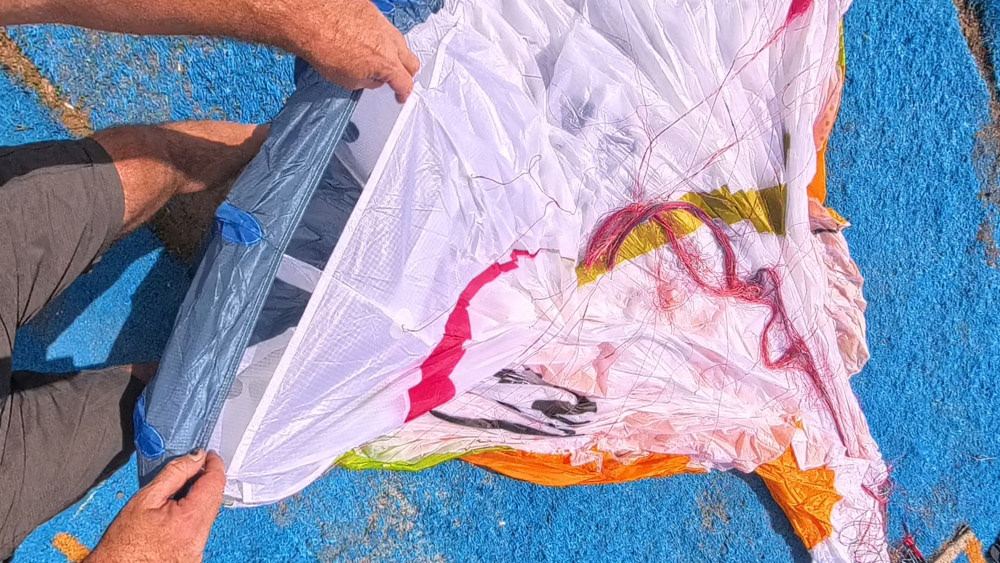
Materials: Dominico DOKDO-30DMF (WR) 40 g/m² top surface; Dominico DOKDO-204432PS (33 g/m²) bottom surface and Dominico 204432FM (33 g/m²) ribs. Liros DSL70 (upper), PPSL120 (middle) and Edelrid 7343-280 (main) lines. 20 mm webbing risers. It also features AirDesign technologies such as Sharknose, Nitinol rods, mini-ribs, Razor Edge, winglets and Vortex Holes.
What’s next in the Vivo 3 test log
This is just the first contact. In the coming entries we will keep flying the Vivo 3 in different sites and conditions: summer thermals, ridge soaring, speed bar, collapse behaviour and everything a progressing pilot needs to know. And, at the end, the full review and video with all our impressions on Ojovolador.com.
Are you the kind of pilot who gives up and heads to the landing field when the thermal won’t work, or do you stay scratching until the big one kicks off? And which paraglider has turned best for you? Tell us in the comments or on our social media.
AirDesign Vivo 3 test log
#1 · Just arrived: first flights in Tenerife (you are here)
#2 · Coming soon: the Vivo 3 under test
See all AirDesign Vivo 3 entries →
+ Info: ad-gliders.com · @airdesign_gliders · Follow us on Instagram: @ojovolador.parapente