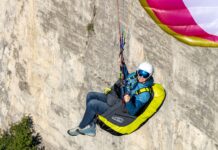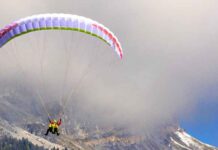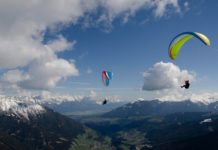
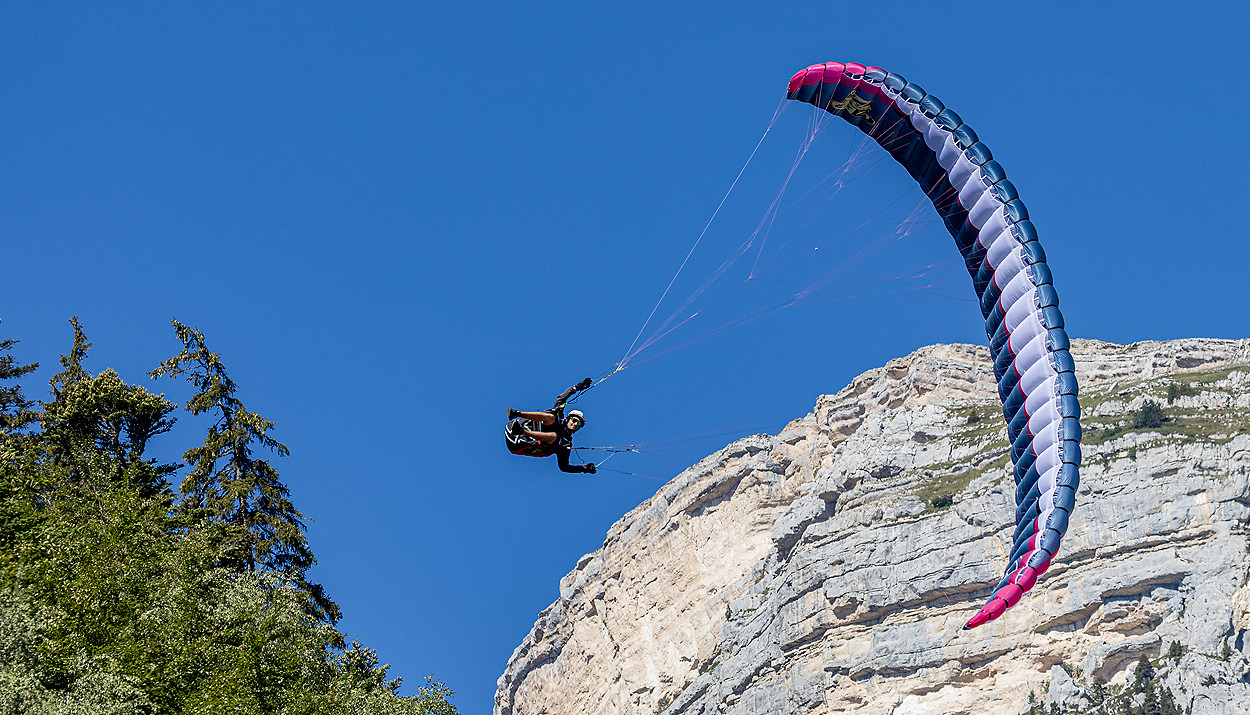
The Swiss manufacturer changes the rules of the game again with the launch of the AirDesign Exta, its first venture into the parakite segment. Instead of simply cloning the concepts born for coastal ridge soaring in strong laminar wind, the Swiss brand brings its alpine DNA to a wing designed for steep terrain, extreme lightness and active air.
QUICK SPEC SHEET: AIRDESIGN EXTA
• Concept: Ultralight mountain parakite / Hike & Fly
• Sizes and weights: 12 (1.85 kg), 16 (2.2 kg), 18 and 21
• Materials: Dominico DOKDO-10DSF (26 g/m²), Dyneema Edelrid Taurus 3.7 mm risers
• Architecture: Solid canopy, low aspect ratio, pyramid D lines
• Flight range: Ridge dynamics, proximity flying, thermodynamics and alpine descent
From the coastal sand to the steep summits
Until now, the parakite discipline was almost pigeonholed into sea breeze, sand dunes and low-level play in laminar conditions. The AirDesign Exta deliberately breaks with that geographic and mental limitation. Developed by the design team led in this project by Hugo Chaboud, the goal was to bring to the parakite the same philosophy of accessibility, lightness and fun that defined the legendary SuSi over a decade ago.
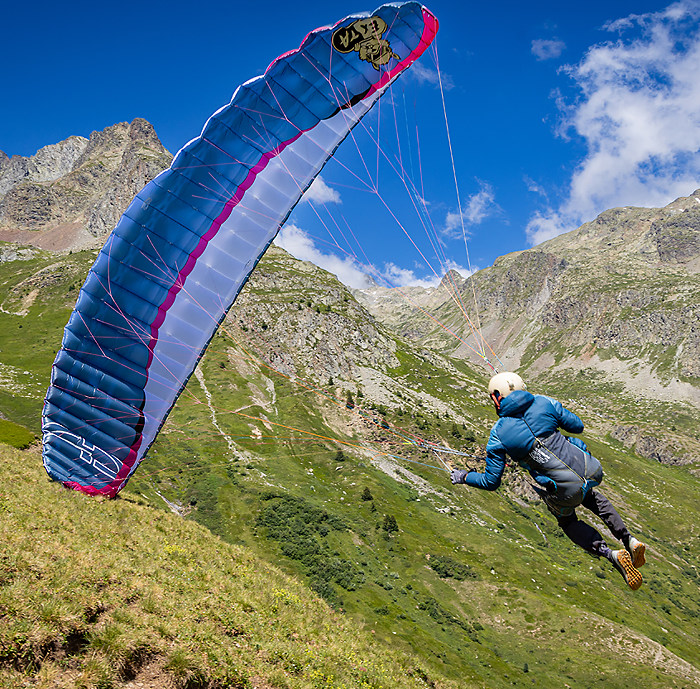
With a volume that fits effortlessly into a 24-litre trail backpack and weights ranging from just 1.85 kg in size 12 to 2.2 kg in size 16, the Exta is not a heavy toy designed to be dragged around on sand: it is a mountain tool. Its range of four sizes (12, 16, 18 and 21) lets wing loading be fine-tuned according to the pilot’s weight, technical level and plans for the day, opening the door both to blistering descents and to more relaxed, floaty flying.
The technical key: lift in broken air and active safety
The most striking aspect of the AirDesign Exta lies in its behaviour outside laminar flow. The great weakness of most parakite wings is their critical loss of lift and their nervous response when the air turns thermic or turbulent. On the Exta, the combination of a contained aspect ratio, profiles with notable pitch stability and a progressive brake feel allows the wing to stay up in ridge lift and restore energy with an unusual nobility for this format.
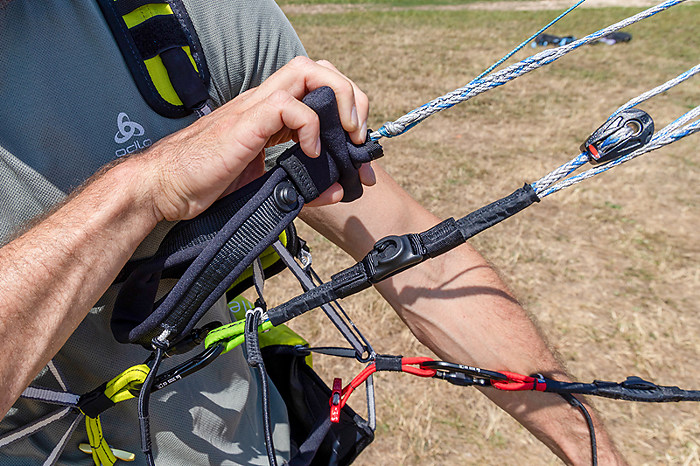
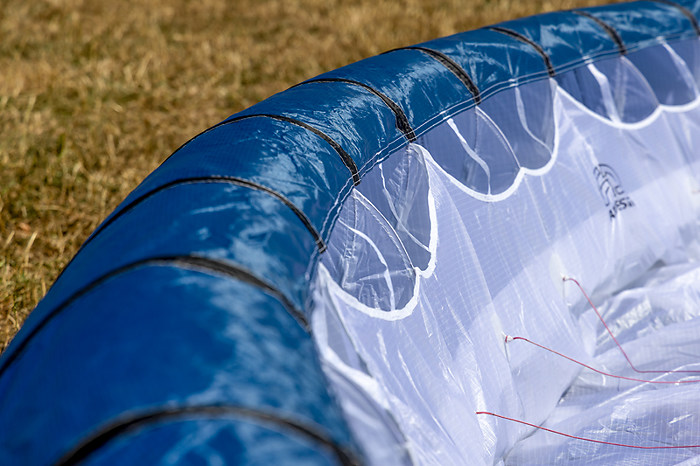
On the construction side, a specifically mountain-oriented development stands out: the pyramid-configuration D lines. This scheme actively pulls the structure to speed up and symmetrise the reopening after a possible front collapse caused by alpine turbulence. In handling, the magnets on the risers mark the neutral point clearly, offering a predictable brake travel with a well-defined pressure point before the stall. That direct feel through the fingers transmits exactly what is happening at the wingtips, allowing speed to be modulated in tight turns without that sense of dropping into the void you get on more reflex, aggressive profiles.
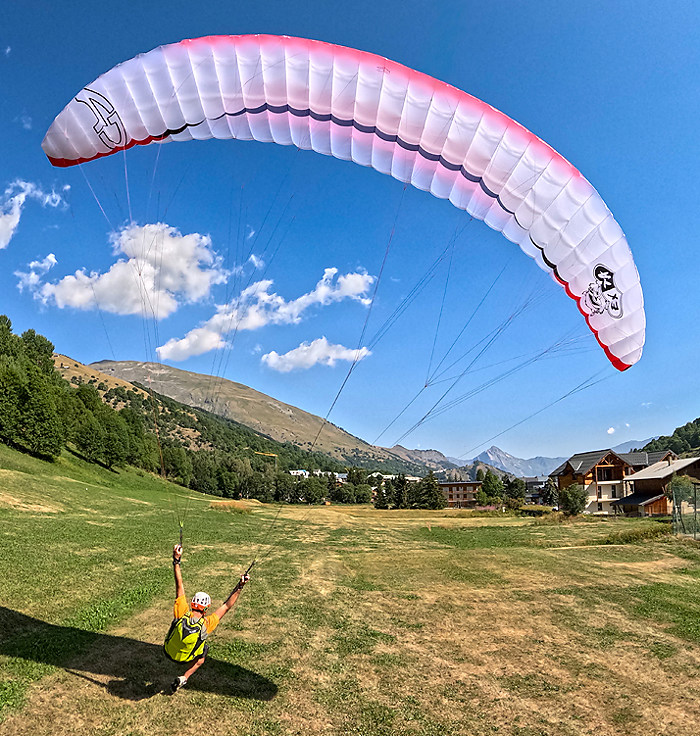
The AirDesign DNA: from the Volt 4 to the Exta
This conceptual boldness does not come out of nowhere. AirDesign has spent years exploring the boundaries between categories, from playful wings such as the SuSi series or the Hike & Fly range (LiVi, Soar), to milestones of technical performance such as the Volt 4 — the two-line EN-C model that we tested in depth at Ojovolador, where it surprised us with its impeccable transmission of feel, its solidity on bar and its handling on the B risers.
The Exta inherits that same construction maturity: clean finishes, non-deformable Nitinol rods, unsheathed Edelrid 8001/U lines and ultralight 3.7 mm Dyneema risers with low-friction rings. It is that high-end paraglider heritage adapted to a miniaturised format, where every stitch and every gram of fabric counts when the weather on the summit gets tough.
Soon we will have a unit in our hands for the full review at Ojovolador, where we will put to the test the real behaviour of the AirDesign Exta on tricky launches, how it reads the mountain thermal gradient and its true balance between speed, glide and recovery in proximity flying.
+ Info: https://ad-gliders.com/project/exta-escapethematrix/?lang=es
In Spain: https://botiga.entrenuvols.com/