
The wait is over for the Swiss brand’s loyal fans. After months of rumours, prototype sightings and plenty of anticipation on launch, Advance has officially revealed the details of the Advance Tau DLS, its new contender in the hotly contested Sport (EN C) category. With this launch, the brand fully embraces two-line technology for this class, a strategic move that promises to shake up the market for pilots seeking pure performance without giving up the house hallmarks: absolute balance and impeccable finish.
At Ojovolador we love following the birth of every new wing closely and, although we have not yet put the Advance Tau DLS through one of our in-depth flight tests, we already know its credentials. We were also lucky enough to cross paths with the development team as they put the finishing touches to it a few months ago, so we already have a first impression of what this machine can do.
The Advance philosophy: the art of not being in a hurry
If there is one thing that characterises Advance, it is that it refuses to be rushed by the market. While other brands immediately jumped into the two-liner race in the EN C class, the engineers in Thun took their time. The goal? To make sure their offering was not just a fast paraglider, but a mature product that kept the comfort that defines the brand.
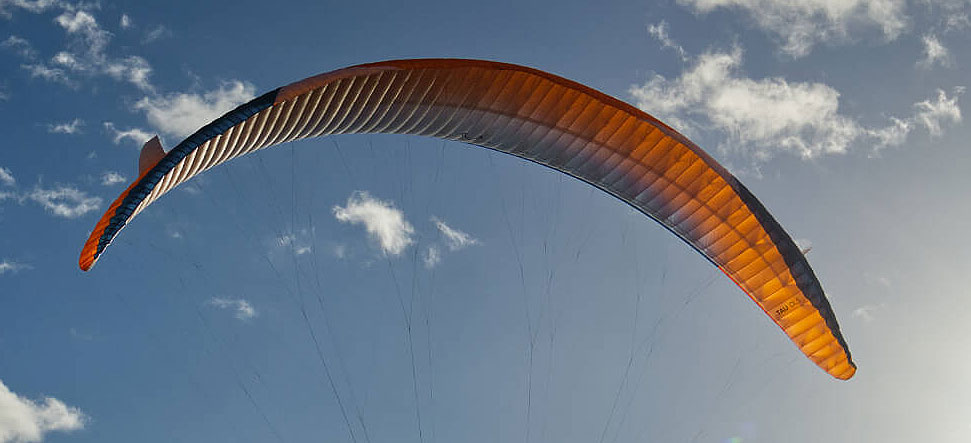
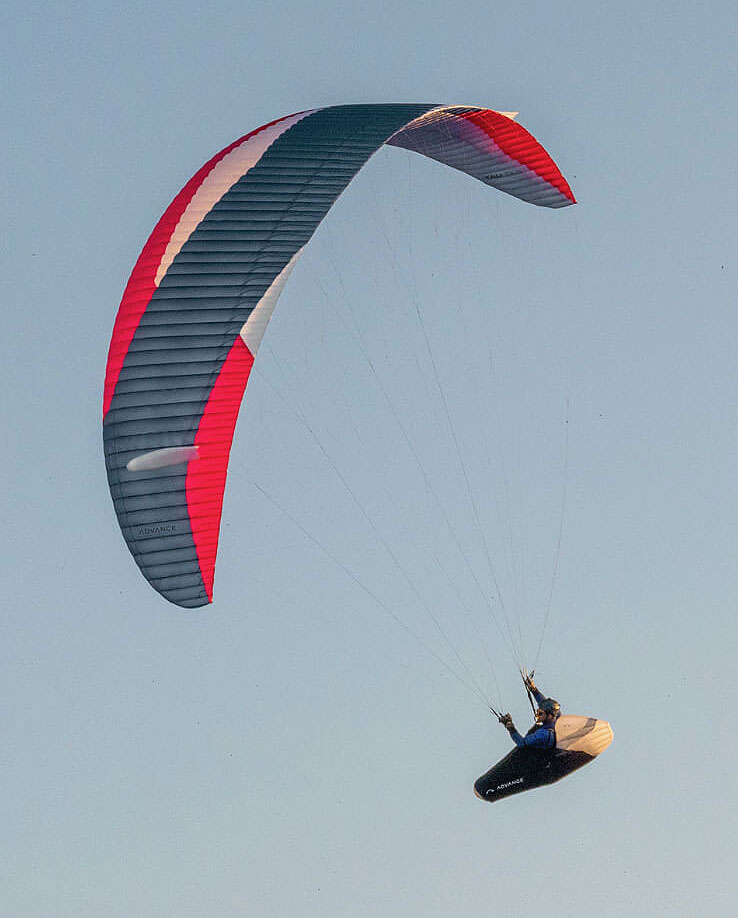
The Tau DLS joins the range to sit in that sweet spot between accessibility and cutting-edge performance. Visually, the wing is a delight and inherits house technologies that are already legendary, such as the iconic winglets on the wingtips — designed to reduce induced drag — and DLS (Durable Lightweight Structure) construction, which balances lightness and structural durability using premium materials.
Advance Tau DLS: an engineering detail that promises to make a difference
Although we will have to wait until we fly it on our own lines for a definitive analysis, the launch technical data reveal a very interesting approach to B-riser geometry and internal tension.
On many two-liners in the Sport category, accelerated flying with rear-riser control can become physical or deliver overly fragmented feedback. Advance says it has worked extensively on pressure simulation so that the Tau DLS keeps perfect cohesion across the whole profile.
Our initial view, looking at the specifications, is that the brand aims to offer a very noble transition for pilots stepping up from a traditional three-liner, softening the “nervous” feel of the most radical reflex profiles in exchange for a much more solid and comfortable glide in turbulence.
First impressions: the Tenerife “laboratory”
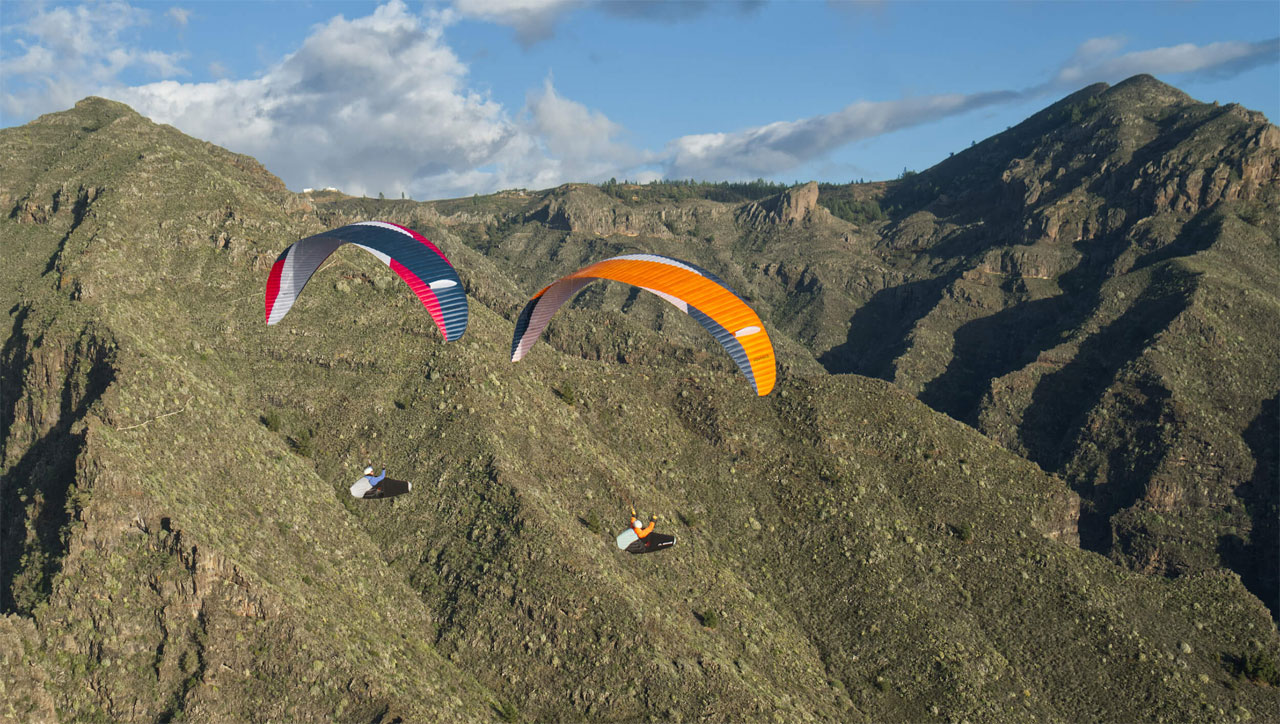
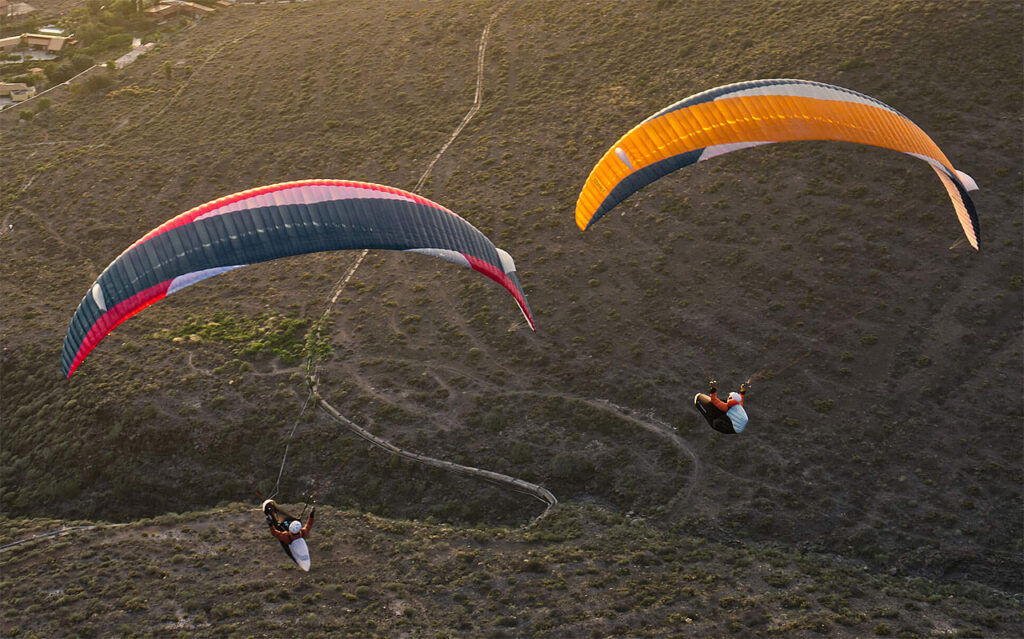
This is where we get a little subjective, because theory is all very well, but the sky has the final say. A few months ago, we had the chance to coincide in Tenerife with Advance’s test-pilot team while they were making the final adjustments to the Tau DLS prototype.
Those of us who know the Canary Islands’ flying sites well know that their aerology is the ultimate test bench: generous thermals, lively wind and transitions that push any profile to the limit. And although at the time we were watching from the outside, we noticed two things that really caught our attention:
- Extraordinarily clean profile: the 3x3D shaping on the leading edge and the use of Nitinol rods make the wing look like a rigid block in the air, without the typical parasitic flexing along the span.
- Outstanding natural buoyancy: in turns where the air went soft or thermals were disorganised, we could see the Tau DLS prototype keeping a very low sink rate, floating and biting into the lift with astonishing ease. It did not seem to need aggressive piloting to stay in the core, turning flat and very smoothly. It cuts through the air with brutal elegance!
📊 Official specifications: Advance Tau DLS
For those of you who like to analyse every number in detail before choosing your next wing, here are the official launch specifications. A 73-cell design that shows the structural complexity Advance has built into this profile:
What kind of pilot is it designed for?
Pending an in-depth test, everything suggests that Advance did not set out to design the most radical or the most demanding wing in the high-C category, but the most efficient one for real cross-country flying. It is a paraglider born to fly for hours on end while minimising pilot fatigue, backed by risers with ergonomic carbon handles for full pitch control.
It is aimed at ambitious distance pilots, Sport class competitors (such as the SRS circuits) and, in general, active pilots looking to step up to two-liners with a brand that is synonymous with passive safety and resale value.
The arrival of this model is certainly one of the big free-flight stories of the year. As soon as we have one in our hands to push it in long thermals and heart-stopping transitions, we will bring you the full test with all the pros and cons. For now, the Advance Tau DLS could hardly have a more promising introduction.
+ Info
- https://www.advance.swiss/en/products/paragliders/tau-dls
- https://www.youtube.com/watch?v=ULbDvWuzIp0
- https://xcmag.com/news/advance-unveil-tau-dls/
Other two-liner C-class paragliders
UP Torre: the two-liner missile for eating up kilometres in the C class
BGD Tigra: the lightweight two-liner beast enters the Sport class arena
Mac Para Elixir: EN-D performance with EN-C certification
UP Paragliders Cerro: the lightweight 2-liner we saw at the Coupe Icare