When we talk about paraglider piloting, there are phrases that, through tradition or poetic precision, become etched into pilots’ collective imagination. Years ago, leafing through the printed pages of the legendary magazine ‘Parapente, vuelo libre’, one technical maxim perfectly captured what separates a pilot who “gets by” from one who masters their paraglider with finesse: “You have to fly with an iron hand, but in a silk glove”.
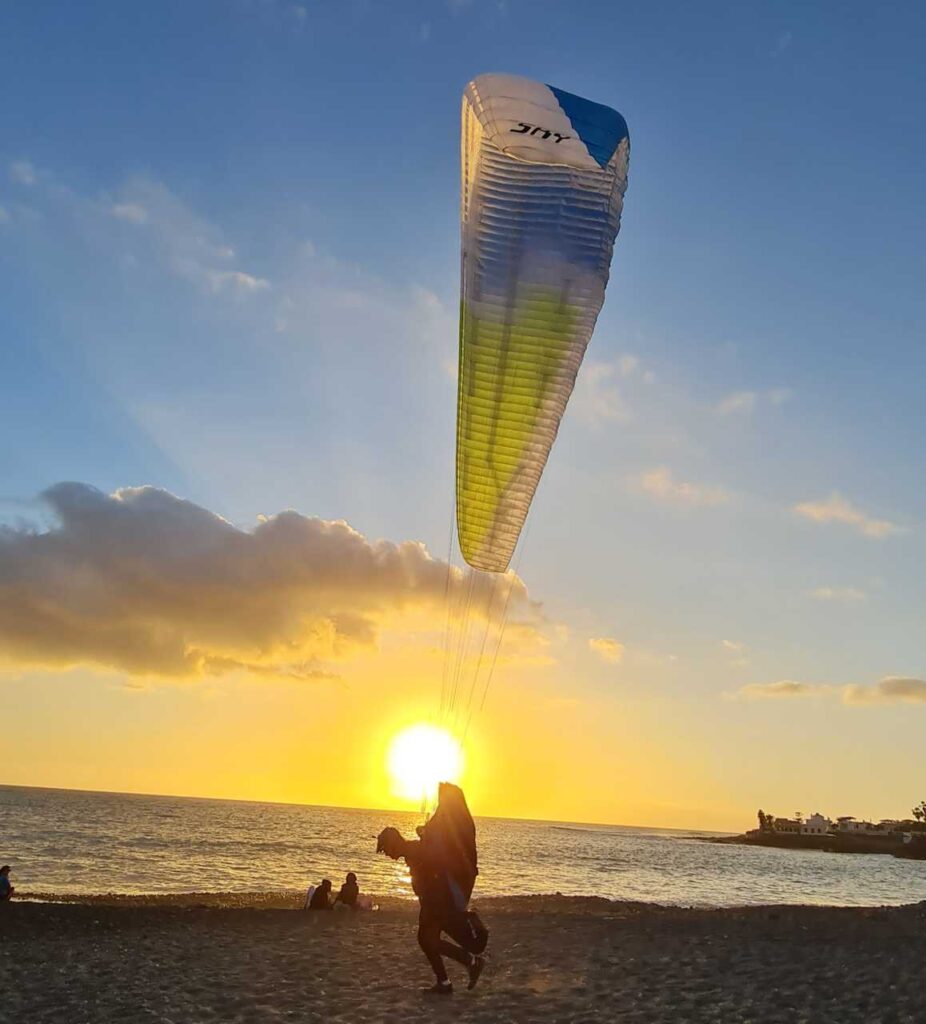
Far from being a mere literary contradiction, this statement captures the purest essence of ground handling and applied aerodynamics: proportionality in piloting response. In a sport where the raw material is invisible and ever-changing — the wind — our ability to modulate the intensity, feel and timing of our mechanical response determines the safety of our launches and our overall performance in thermals.
“PARAGLIDER PILOTING, on the ground or in the air, is not a battle of strength; it is a three-way dialogue between the wing, the elements and the pilot. Learning to listen is the first step to stop fighting.”
What is proportionality and why is it the Holy Grail of paraglider piloting?
In our early training we are taught basic brake control: brake to hold back, release to speed up. However, when conditions become dynamic, many pilots fall into the trap of over-piloting. Over-piloting happens when the pilot’s response is out of proportion (whether through excessive force or delayed reaction) to the physical stimulus the wing has received from the air.
Proportionality is the pilot’s ability to apply exactly the right amount of pressure on the brakes or risers at precisely the right moment. It is not about reacting late and abruptly (pure iron hand), nor being so ethereal that the wing overflies us and collapses (pure silk glove). It is the perfect fusion of both worlds: structural firmness when the air mass demands authority, filtered through millimetric sensitivity in the fingertips.
The three levels of dialogue with the wind
To understand how to apply this feel on the launch slope or during inflation, we can classify our interaction with the wing into three acoustic and dynamic scenarios that every pilot must learn to decode:
| Wing / wind stimulus | Physical manifestation | Proportional action (iron hand + silk glove) |
| The whisper | Slight thermal oscillations, gentle breeze, small losses of pressure at the stabilos. | Millimetric adjustments. The “silk glove”. Keep just the right tension with your fingertips without braking the profile. |
| The raised voice | Marked gusts, the wing tends to overshoot energetically during inflation, or loses pressure when the breeze drops. Active thermals on launch. | Assertive firmness. A clear, deep brake input at the moment of the canopy’s maximum acceleration, releasing the brake as soon as it returns overhead. |
| The unexpected shout | Severe thermal punch, sharp hit on the ground, imminent tendency to surge or collapse. | The “iron hand”. Instant, forceful and authoritative action to stop the mass of the wing, followed by a smooth return to flying position. Let the wing breathe! |
Paraglider piloting on the ground: the proprioception laboratory
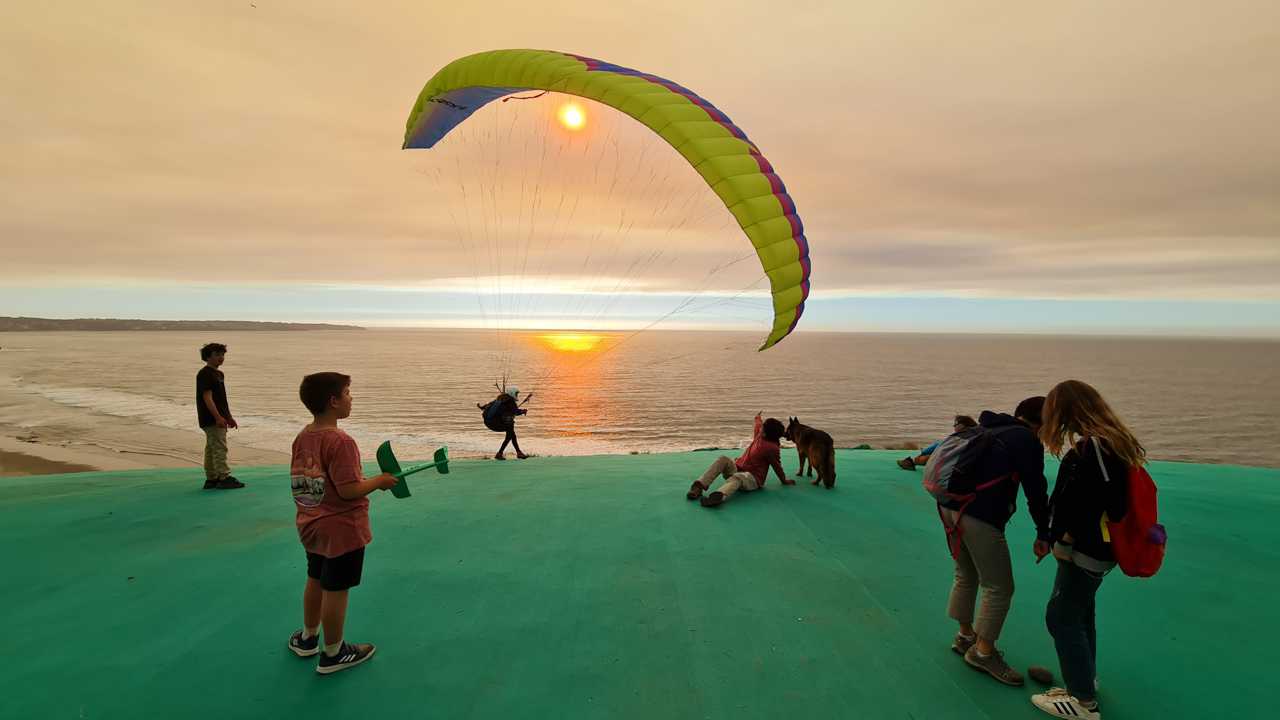
There is an inescapable truth in free flight: performance in the air starts with your feet on the ground. The hours spent ground handling are not just a formality for school students; they are the advanced pilot’s ongoing gym.
When we ground handle, we face the air mass at its most turbulent, shaped by the terrain. It is the ideal setting to refine our proprioception. If you can keep a wing open and stable above your head in variable conditions, you will have automated the mechanical reflexes you need when you hit a broken climb at 2,000 metres.
An advanced exercise: blind ground handling
To turn your hands into a true extension of your paraglider, we suggest a classic but highly effective exercise: controlling the wing with your eyes closed (always in a safe, open environment with smooth wind).
By cutting out your sense of sight, you force your brain to reconfigure its information channels:
- Feel in your fingers: you learn to read the grams of pressure transmitted through the brakes.
- Pressure in the harness: you feel the pull vector on your hips before the wing visibly moves.
- The breeze on your face: the change of wind on your skin instantly warns you of changes in the direction of the airflow.
Direct benefits for flight performance
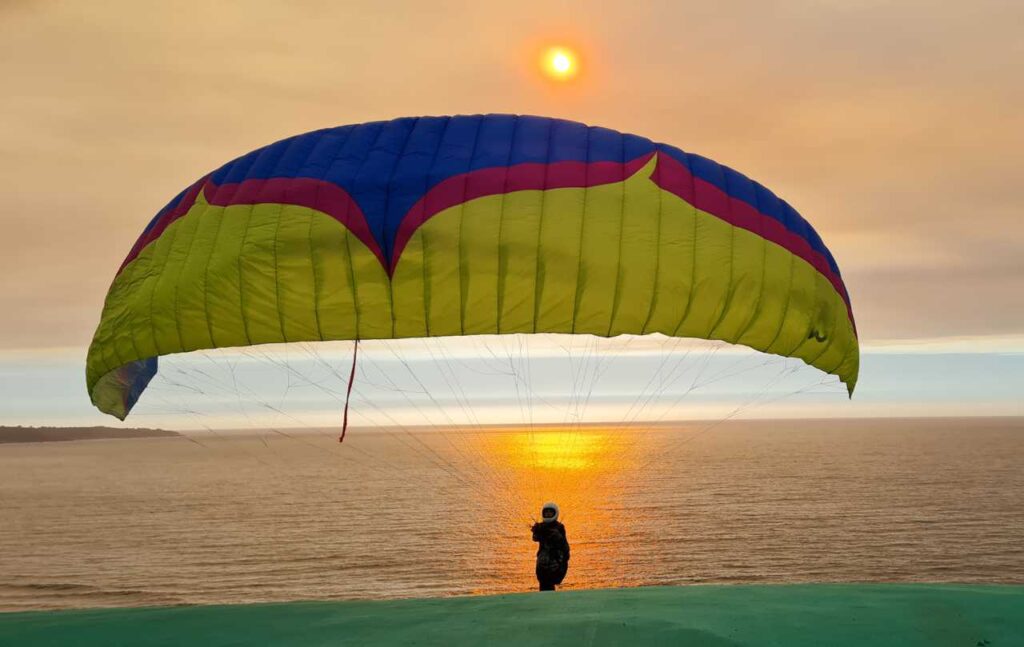
What does all this effort and sensitivity translate into once we take off? The benefits are direct and measurable:
- Smooth, safe launches: no more out-of-control running launches or aborted take-offs because the wing overshoots and falls. Inflation becomes a smooth transition from ground to air.
- Efficient thermalling: a pilot without feel tends to “break” the wing’s glide by constantly applying parasitic brake. Proportionality lets you keep the wing open with the least possible brake, optimising sink rate and the performance of your profile.
- Active incident prevention: by listening to the air’s “whispers”, your hand acts preventively hundredths of a second before a collapse occurs. You stop the collapse before it develops.
Conclusion: what kind of relationship do you have with your paraglider?
As in any healthy relationship, the cornerstone is communication, and to communicate well you have to know how to listen. Many pilots have a truly “toxic relationship” with their paraglider: they ignore it when it warns them subtly, panic when the wing shouts at them, and respond with disproportionate tugs that only make things worse.
Next time you go ground handling or get ready on launch, take a deep breath. Feel the risers, sense the pressure and look for the silk glove. Your flight will reward you with exquisite finesse and unshakeable safety.
Note: this article expands on the technical and narrative concepts presented in our recent Instagram Reel. Follow us on social media for more free-flight technique and know-how. Good lines and open skies!
La Térmica N4 – Piloting, paragliding, manoeuvres and SIV incident simulation (in Spanish)